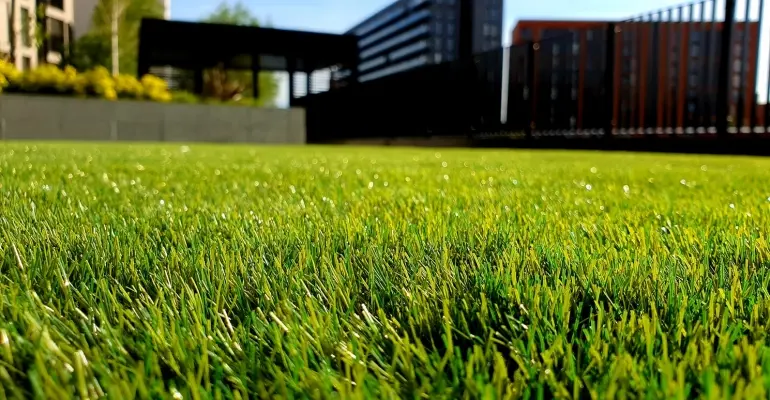
Want an even, green lawn that will delight the eye all season long? Establishing a lawn may seem demanding, but it doesn't have to be difficult or expensive. The key to success is good preparation, choosing the right moment, and matching the method and grass seed mix to the conditions on your plot. Find out how to establish a lawn step by step and get a result that will last for years.
What should you know before establishing a lawn?
Establishing a lawn, whether from seed or from turf rolls, is a fairly simple job that is worth doing yourself to reduce the cost of the investment. It pays to approach the project in stages from the very beginning – working step by step helps you avoid mistakes and ensures a lasting result. The key stages are preparing the ground, choosing the method (seed or turf rolls), and the aftercare that follows. For the grass to grow properly and not cause problems later on, it is essential to prepare the soil correctly and choose the seed mix carefully. Proper soil preparation is the foundation of success for the whole project.
A properly established lawn can become a real showpiece of your garden. However, it requires attention to detail – thoroughly clearing and levelling the area, preparing the soil, and choosing grass suited to its intended purpose. Some species work well for ornamental lawns, while others suit heavily used spaces. We establish a lawn for years to come, so this is an investment on which it is not worth cutting too many corners. The cost of establishing a lawn depends above all on the chosen method – a turf-roll lawn can cost up to twice as much as one grown from seed. Additional expenses come from work on adapting the ground and from the possible installation of systems such as irrigation, lighting or anti-mole netting. Carefully prepared ground is the basis of a lawn's durability and appearance – this stage should not be skipped.
Finishing the edges is particularly important for ornamental lawns, where every detail counts. Regular care – mowing, feeding and watering – will keep the turf looking healthy for a long time. Already at the planning stage, it is worth considering what effect you want to achieve and what function the lawn is to serve – ornamental, recreational or purely practical.
When should you establish a lawn?
The right timing is crucial to the success of the whole process. A lawn can be established throughout the growing season, from spring to autumn, but some times are better than others. Much depends on the climate and soil conditions and on the chosen method. A lawn from seed is best sown in early spring, around the turn of April and May, when the soil is already warm enough (min. 10°C). This timing is especially recommended in the cooler regions of Poland and on less permeable soil. Before sowing, it is also worth fertilising the soil appropriately.
An alternative is late summer and autumn, from the second ten days of September until the end of October. At that time the soil is still warm, and the air humidity encourages germination.
With a turf-roll lawn, the window for laying is more flexible. The work can be done from March to November, even at lower temperatures. Turf rolls can also be laid in late autumn, but keep in mind that rooting may be somewhat slower in cool conditions.
What soil is best for a lawn?
Whichever mix you choose, grass has high soil requirements, which are often underestimated. Before establishing a lawn, it is worth checking the soil pH (the optimal pH is 5.5–6.5) and, if necessary, liming it. Plants need nutrients and water not only to grow, but also to recover after mowing. Fertile, humus-rich, moderately moist and well-drained soil works best. A sandy-clay soil is ideal, as it provides both drainage and air access to the roots.
Lighter, sandy soils are worth enriching beforehand by mixing them with compost, peat, manure or garden soil. Sowing green manures (e.g. field peas or lupin) several months before you plan to establish the lawn is also a good practice – they improve the soil structure and increase the humus content.
The area for the lawn should be cleared, levelled, dug over (e.g. with a rotary tiller) and raked. After topping up the layer of fertile soil, it is worth waiting about two weeks for the ground to settle. Weeds should be removed twice – by hand or with selective herbicides. After sowing, it is worth covering the seeds with a thin layer of coarse sand, which helps germination and improves seed distribution.
Which grass seed mix?
A wide variety of grass seed mixes are on sale, adapted to different conditions and purposes. Your choice should take into account features such as resistance to trampling, growth rate, soil requirements and sun exposure. All-purpose grasses don't always deliver – it is worth looking at the composition of the mix and matching it to the specific site.
For utility or recreational lawns, sports mixes are recommended – e.g. those with red fescue, known for its resistance to trampling and unfavourable conditions. In dry spots, grasses that tolerate drought and sun will work better. For areas visited seasonally, e.g. around a holiday cabin, a practical choice may be a mix with micro-clover – less demanding and self-fertilising. In shaded places, it is worth considering an alternative to a lawn, such as ground-cover plants. A wildflower meadow is another interesting option, in which grass seeds form the base for a diverse range of vegetation.
Establishing a lawn from seed
When establishing a lawn, the first step after clearing the ground is the assembly of the electrical installation and the automatic irrigation system, if these are planned, of course. At this stage you should also lay anti-mole netting. It should be covered with a layer of soil a few centimetres thick. The area should be rolled with a garden roller, after first loosening the soil slightly.
Next comes sowing the seed, which is the key stage of establishing a lawn step by step. Grass seed can be sown by hand (this takes some practice) or with a seed spreader (it is worth mixing the seed with sand). For an even result, we recommend sowing across the width of the lawn and then along its length, i.e. sowing twice in a crisscross pattern. On average, 100 m2 requires 2.5-3.5 kg of seed. After sowing, it is worth covering the seed lightly with soil, e.g. using the back of a rake.
The next step is to roll the lawn again and water it with a fine spray so that the seeds are not washed away and the soil stays suitably moist. For a young lawn, regular watering is crucial to support seed germination and healthy grass growth. Conditions that favour germination are constant moisture and a moderate temperature.
In the first weeks after sowing, the grass needs intensive care and attention, including regular watering and monitoring of the soil condition. Pay particular attention to the edges of the lawn to give them a neat finish and prevent the turf from creeping over.
The first mowing takes place once the grass reaches the right height – this is an important stage in the grass's development and the lawn's ongoing upkeep. Thanks to these steps, you will get a dense, even lawn that will delight the eye for a long time.
Establishing a lawn from turf rolls
Laying turf rolls is quick and intuitive, but it should be done as soon as possible after purchase so the grass doesn't dry out. On a levelled and prepared base, the rolls are laid with staggered joints (like bricks in a wall). If necessary, the turf can be trimmed, e.g. with a spade. The individual strips should fit tightly against the ground, with no gaps. After laying, the lawn should be rolled and watered thoroughly.
The first mowing (for both methods) is done when the grass reaches about 10 cm. The first cut should be higher and gentler – later mowings can be lower.
Lawn irrigation – how and when to water a new lawn?
Watering is crucial, especially in the first weeks after establishing a lawn. You should:
- water every day or every other day,
- use a gentle, fine spray of water,
- avoid letting the soil dry out, but also avoid overwatering.
A lawn grown from seed needs more intensive watering because, unlike turf from rolls, it doesn't yet have a developed root system. You can gradually reduce how often you water, but stay vigilant during hot spells.
Mowing the grass for the first time – when and how?
The first mowing is done when the blades reach a height of about 10 cm – usually 6–8 weeks after sowing. The mower should be set to a height of 4–6 cm, and the blade should be sharp so as not to tear the young plants. Regular mowing from the start encourages the turf to thicken and increases the lawn's resistance to weather conditions. After the first mowing, it is worth filling in any gaps by overseeding thinner spots.
Weed removal and basic lawn maintenance
Weeds compete with grass for water, light and nutrients. Therefore:
- in the early phase, it is best to remove them by hand,
- in case of heavier weed infestation, selective herbicides can be used (following the manufacturer's instructions),
- regular lawn maintenance – mowing, feeding and watering – supports grass growth and limits the appearance of unwanted plants.
It is worth monitoring the condition of the turf, especially if ornamental or sports mixes have been used, as these may differ in their resistance to diseases and pests. Systematic care and a quick response to problems are the best way to a beautiful, well-kept lawn all season long.
Prepare the ground well, choose the right moment and the right grass mix, and soon you will be enjoying a beautiful lawn that becomes the pride of your whole garden – work step by step and see for yourself that it is truly worth it!
FAQ
Does preparing the ground for a lawn require specialist equipment?
No, in most cases basic garden tools are enough – a rotary tiller, a rake and a garden roller. The most important things are levelling and weeding the area, and ensuring a suitable soil structure. If you are planning a larger area or facing difficult conditions, you can consider hiring equipment.
How long does grass take to germinate after sowing?
Depending on the weather and the mix, the first blades may appear as early as 7–14 days after sowing. It is best to plan sowing for a time of moderate temperatures and good humidity. Regular watering of the lawn significantly speeds up germination.
Can you establish a lawn at low temperatures?
Sowing grass is not recommended at temperatures below 8–10°C, because the seeds need warmth to germinate. The situation is different with a turf-roll lawn – turf can be laid even at low temperatures, provided the soil is not frozen. Keep in mind, however, that rooting will then be slower.
How do you match the grass mix to the lawn's purpose?
For ornamental lawns, finer, slow-growing species such as red fescue work well. For a utility or recreational lawn, it is better to choose grasses resistant to trampling and changeable weather. It is worth deciding on the lawn's purpose at the planning stage.
How often do you need to mow a lawn after establishing it?
Mowing begins when the grass reaches about 10 cm in height. At first you should mow less often and higher, and then, depending on the growth rate, usually every 7–10 days during the season. Regular cutting encourages the grass to thicken and look healthy.
How can you prevent your lawn from drying out in summer?
Watering the lawn in summer should be regular and adjusted to the weather – ideally early in the morning or in the evening. During hot spells, water more often so that the soil stays slightly moist at all times. Watering too infrequently can lead to drying out and yellowing of the turf, especially if the ground preparation was insufficient.