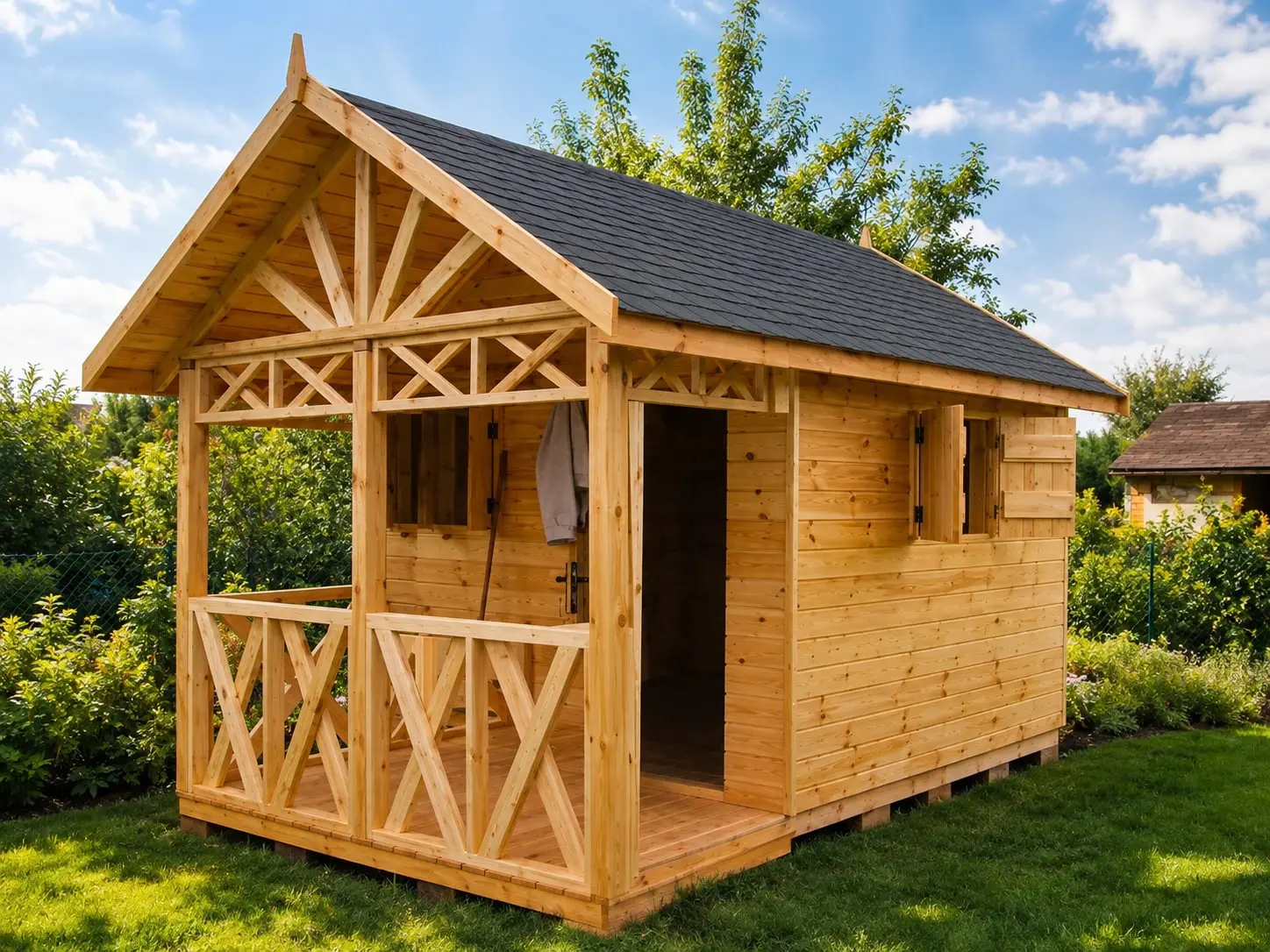
Wood is an exceptional material that calls for equally exceptional care. With it, wood can impress with both its looks and its properties. One way to protect a facade made of wood is to paint it. Applying a suitable product to every board of the cabin helps shield it from harmful external factors. So what should you paint a wooden holiday cabin with?
Painting a wooden cabin — is it worth it?
Wooden structures have many advantages. Above all, they create a pleasant microclimate indoors and often contribute to a cozy atmosphere. No wonder this natural material is so often used to build holiday cabins. Their owners should remember, however, that wood needs proper care to look great for a long time and to keep doing its job.
Kiln-dried wood is increasingly used in building houses, so structural elements that have no contact with the weather don't require protection. That doesn't mean, however, that painting holiday cabins has stopped making sense. If you want a beautiful facade, you still need to look after it — unlike the structural frame, this part of a wooden cabin will be exposed to rain, snow, wind, low and high temperatures, and sunlight, which can lead to fading, cracking, shrinking and mold growth.
It's worth noting that painting often turns out to be necessary if the household dreams of a colorful cabin. Depending on the product used, you can achieve a matte or glossy facade in the natural shade of wood, or the opposite — a different color, such as green, white, black or blue. This kind of product can also be used to make the front wall of the house stand out. In this case, the only limits are usually your imagination and the budget you want to spend on painting your holiday cabin.
What should you paint a wooden cabin with?
One of the most popular ways to protect a wooden holiday cabin is surface wood preservation. You can use either water-based or solvent-based products for this. The former are odorless, so they can be used successfully both outside and inside wooden cabins.
It's also worth noting that this type of preservative is chosen by people who prioritize ecology. On the other hand, solvent-based products penetrate deeper into the wood and therefore are more resistant to washing out than water-based variants. Their downside, however, is an unpleasant smell and the fact that they are generally not eco-friendly.
The following types of preservatives can be distinguished:
- water-repellent,
- fire-retardant,
- biological protection, which prevent bacteria and mold from developing on the wood.
Curative products are also available, applied locally when fungi or mold appear on the facade. However, it's worth noting that preservatives are not the only way to protect wood. You can also opt for varnishing, which highlights the wood grain and brings out its color while protecting it from the harmful effects of external factors. In this case, remember that varnishing may need to be done as often as every two years. It's also a good idea to apply a preservative under the varnish.
For facades made of kiln-dried wood, staining can also be a good choice, but keep in mind that it doesn't protect against mold or fungi as well as other wood protection methods. For this reason, glaze varnish is also a recommended solution in some cases, working especially well in places exposed to moisture. A wood glaze also provides significant protection against harmful external factors, including UV radiation.
Some people also decide to use enamel paint, which, however, is recommended in places not exposed to mechanical damage. In this case, it's worth considering applying two coats of preservative to the wood first, which will give the cabin greater protection. It should also be noted that for those who want to change the color of their facade, there are paints on the market that also work as a preservative. Which products should you choose for painting a wooden cabin? It's best to invest primarily in natural options, which let the boards "breathe" and are not harmful to the environment.
How to paint a wooden holiday cabin?
Before you start painting, it's extremely important to prepare the wood properly. First of all, every element of the structure should be cleaned. All you need is a bowl of warm water with some gray soap, which has antibacterial action and helps remove bacteria effectively. Sandpaper, in turn, can be used to remove any stains, but be careful, because exposing the raw layer of wood may cause light discoloration to appear on the facade after preservation.
You should also remember to remove any residue of oil paint and varnish made with synthetic resin from the facade. Mold must not be overlooked either, if it is present on the boards. Sandpaper can also be used to bevel sharp edges. It's best to plan the painting of your holiday cabin for a day when the temperature is no lower than 5°C and no higher than 25°C.
It's also worth remembering not to paint the cabin on a sunny day if it's exposed to UV rays. Moreover, if it hasn't been painted before, you also need to check that the facade is dry enough. Only then can you start painting. For most paints, manufacturers provide guidance on choosing brushes suited to the chosen product.
Painting a wooden cabin — what to keep in mind!
Now that you know what to paint a wooden holiday cabin with and how to do it, you can get to work. If you are still unsure what to use to protect your facade, feel free to contact us. The experts at Drewnolandia will help you choose the right products to keep your structure looking excellent for many years. After painting, however, remember that depending on the product used, it can take up to 4 weeks to reach full resistance.
FAQ:
What should you paint a wooden holiday cabin with?
A wooden holiday cabin is best painted with a product that will properly protect the facade. It's worth choosing high-quality preservatives or varnishes.
Can a wooden holiday cabin be painted in a color of your choice?
Yes — colored paints with built-in preservatives are now available on the market and are great for painting the facades of wooden cabins.
When is the best time to paint a wooden facade?
When planning to paint a facade, choose a time when the air temperature is moderate and the walls of the structure won't be exposed to direct sunlight.