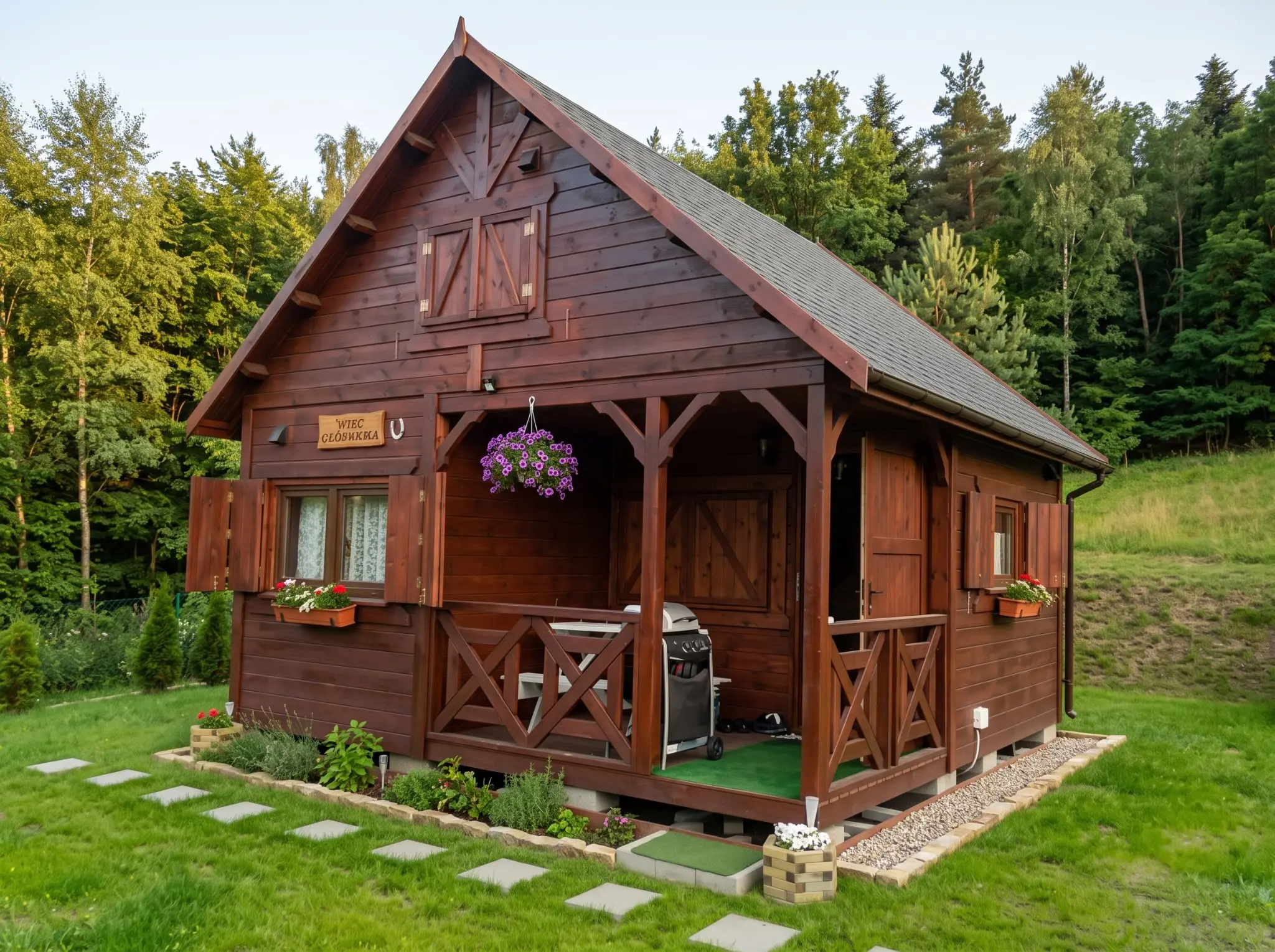
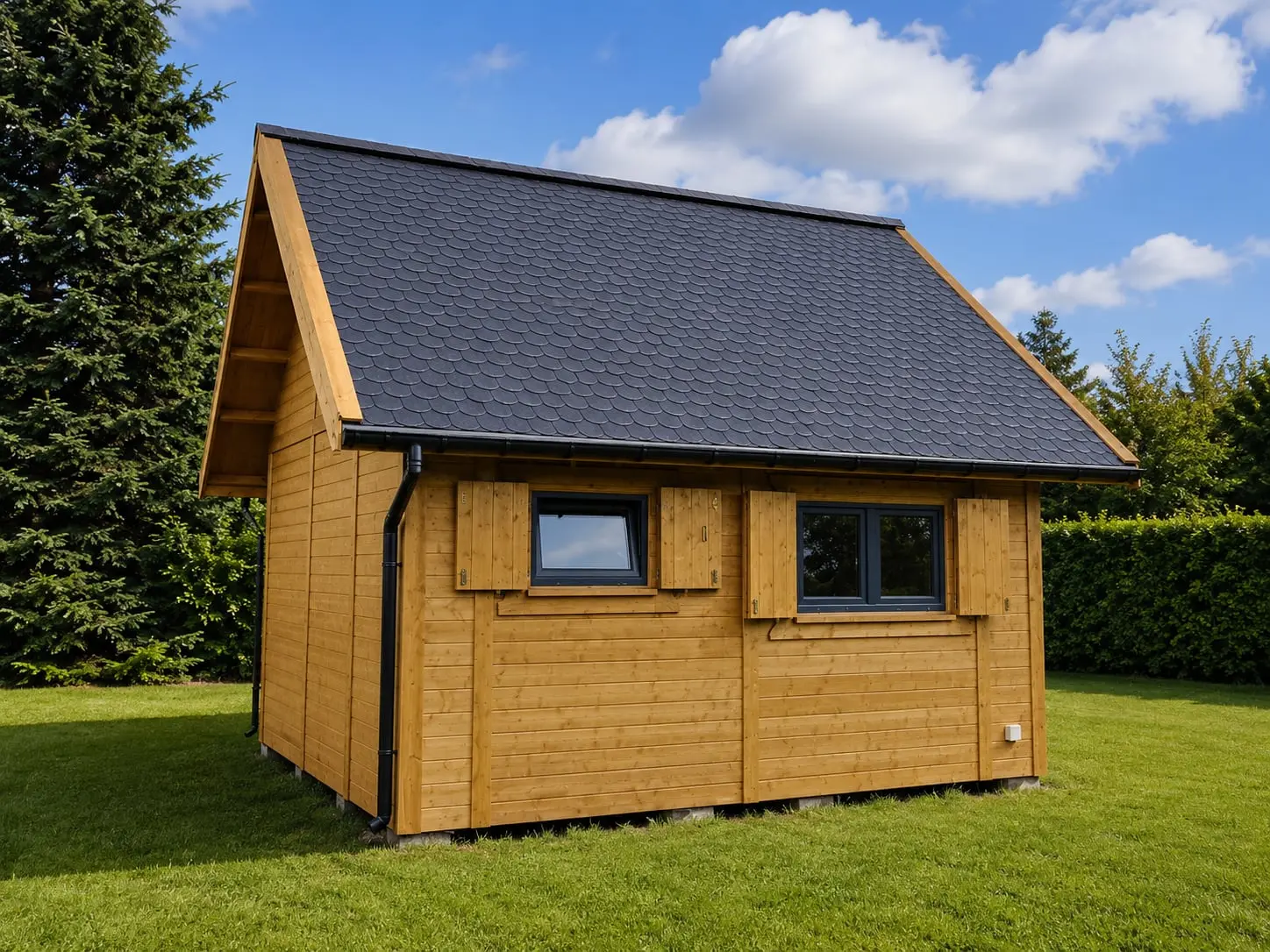
Wooden holiday cabins are popular – they look stunning, are eco-friendly, and create a cozy atmosphere. To stand the test of time, their structure must be stable and resistant to changing weather and various mechanical factors. Is wet timber suitable for use in construction?
This question often pops up on social forums. It’s important to note that using unsuitable materials affects the durability of homes and the comfort of users. That’s why Drewnolandia experts always choose materials with optimal moisture.
Wet structural timber – standards and technical requirements
Issues concerning timber parameters are governed by relevant guidelines and regulations, including:
- Warunki Techniczne Wykonywania i Odbioru Robót Budowlanych (WTWiORB)
The Institute of Building Technology publishes a series with guidelines for timber constructions (1). According to the data, the material used for construction should meet PN-EN 14081-1 standards. Its moisture must be up to 18% (for structures protected against damp) or up to 23% (for structures exposed to weather). Additionally, the investor must verify the strength class. When choosing timber for the roof, also check whether it is dry or wet.
- Norma projektowa PN-EN 1995-1-1
The document “Design of wooden structures. Part 1-1: General provisions. General rules and rules for buildings” clarifies issues related to timber buildings and wood-derived materials. It includes recommendations on moisture content of articles and also contains templates for structural calculations.
- Norma CE
The timber supplier is obliged to mark it in accordance with the European CE (Conformité Européenne) standard. In practice, this symbol confirms good quality products, proper grade sorting, and strength classes. The absence of this mark can result in a fine of up to PLN 100,000 (this is regulated by the Building Products Act, art. 34).
Lumber for the roof – wet or dry?
The roof truss is a crucial element, so materials for its assembly must be carefully selected. Wood cannot be used immediately after felling, because its moisture content is then above 50%. During drying, water is released from the material, causing fibers to shrink. Differences are most noticeable in cross-sections, which shrink by several, or even a dozen millimeters after drying. This creates major problems already during execution. Often, the purchased materials are warped and cupped (deformed under humidity). Even if you manage to install them, soon gaps will appear at joints, causing changes in the static arrangement or localized stresses. As a result, the roof truss becomes less durable. Therefore, the answer to whether the wood should be dry or wet seems unambiguous.
Why choose dried wood?
When selecting wood for the roof or other elements of the structure, check whether it is dry or wet. Wood with the proper moisture level brings many benefits, for example:
- Easy processing
Poorly dried material causes handling difficulties during installation due to increased friction and weight. This, in turn, leads to faster wear of equipment.
- Better impregnation
Wet wood cannot be impregnated effectively. To properly protect the structure of the house, you should use dried material and apply an appropriate protective treatment.
- Lower susceptibility to pests and fungi
Humid environments promote the growth of mold fungi and various insects. Therefore it is worth investing in quality materials. Chamber-dried wood kiln-dried wood performs well, as it dries out under high temperature.
Choose solid wooden cabins!
Holiday cabins or all-year cabins produced by our company are distinguished by durability. For their production we use materials from proven suppliers. We employ different types of timber, including C24 structural wood in a visual class, KVH wood with excellent insulation, and BSH wood, which is industrially refined. Want to learn more about our offer? Contact us.
Institute of Building Technology, Part A: Earthworks and Structural Works, Bulletin 4: Wooden Constructions, 2020.