
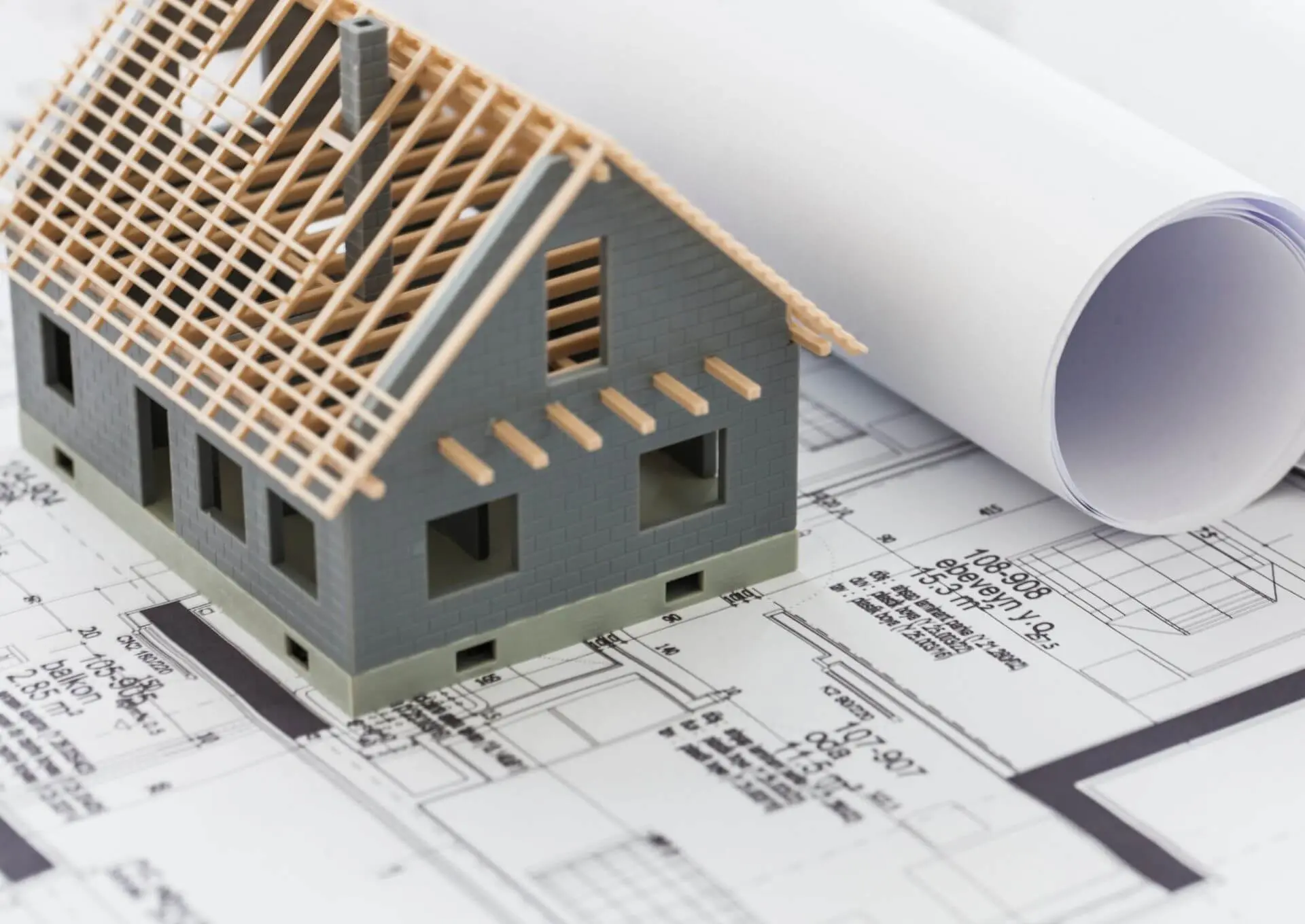
The size of your house and its building footprint have a huge impact on your living comfort, as well as on the investment cost and the ongoing costs of running a brand-new building. Unfortunately, we can't always build that dream home – comfortable and large enough. The building coverage ratio is precisely defined by the local spatial development plan, which contains all the information relevant to the investor, including the maximum size of a cabin on a plot.
Cabin size on a plot – why does it matter?
The size of a holiday or all-year cabin on a plot matters greatly for our comfort. It's no coincidence that most private investors try to build a home that fits their future needs, such as planned children, even at the cost of a larger loan. Living in cramped rooms quickly becomes uncomfortable. Of course, a large house means large expenses, and large expenses mean further sacrifices, such as taking on a second job or cutting unnecessary spending.
Holiday cabins and all-year cabins made entirely of wood are becoming more and more popular. It's no surprise, as this solution has many advantages over brick houses. Why? Above all, because of lower construction costs and the minimum of formalities required. Today, a 70-square-metre holiday cabin or all-year cabin can be built on the basis of a notification – you simply need to notify the county office responsible for your chosen plot of your intention to build. We can start construction after 21 days if we haven't received a negative response during that time. What are the advantages of cabins up to 70 m2? There are plenty. They include, among others:
- they can be put up in anywhere from a few days to a few weeks,
- relatively low investment costs,
- minimal formal requirements
- easy to adapt to your individual needs
- low maintenance costs
However, it's worth knowing that there are also certain requirements that anyone who wants to put a holiday or all-year cabin on their plot must meet.
- A maximum of one cabin per 500 m2 of plot – with this rule, the legislator wanted to reduce the risk of circumventing the regulations in order to build large housing estates.
- Cabins may not be larger than 70 m2 – this, together with the maximum span of structural elements, is a very important requirement for the cabin's construction. It's worth having the design prepared by a reputable company such as Drewnolandia, whose offer includes cabins that meet the above requirements.
What size should a holiday cabin be?
What matters most is the location of the house and its size, measured along the outline of the external walls. For plots in Family Allotment Gardens (ROD), it is 35 m2; for private properties, up to a maximum of 70 m2. However, it's worth remembering that in the former case you can increase the cabin's usable area by using a mezzanine or loft, as long as you keep to the maximum building height of 5 metres. For buildings on private plots, the maximum permitted height is defined by the Local Spatial Development Plan and the Development Conditions.

CRP8 PLUS Cabin - WT 2021 – 55 m²
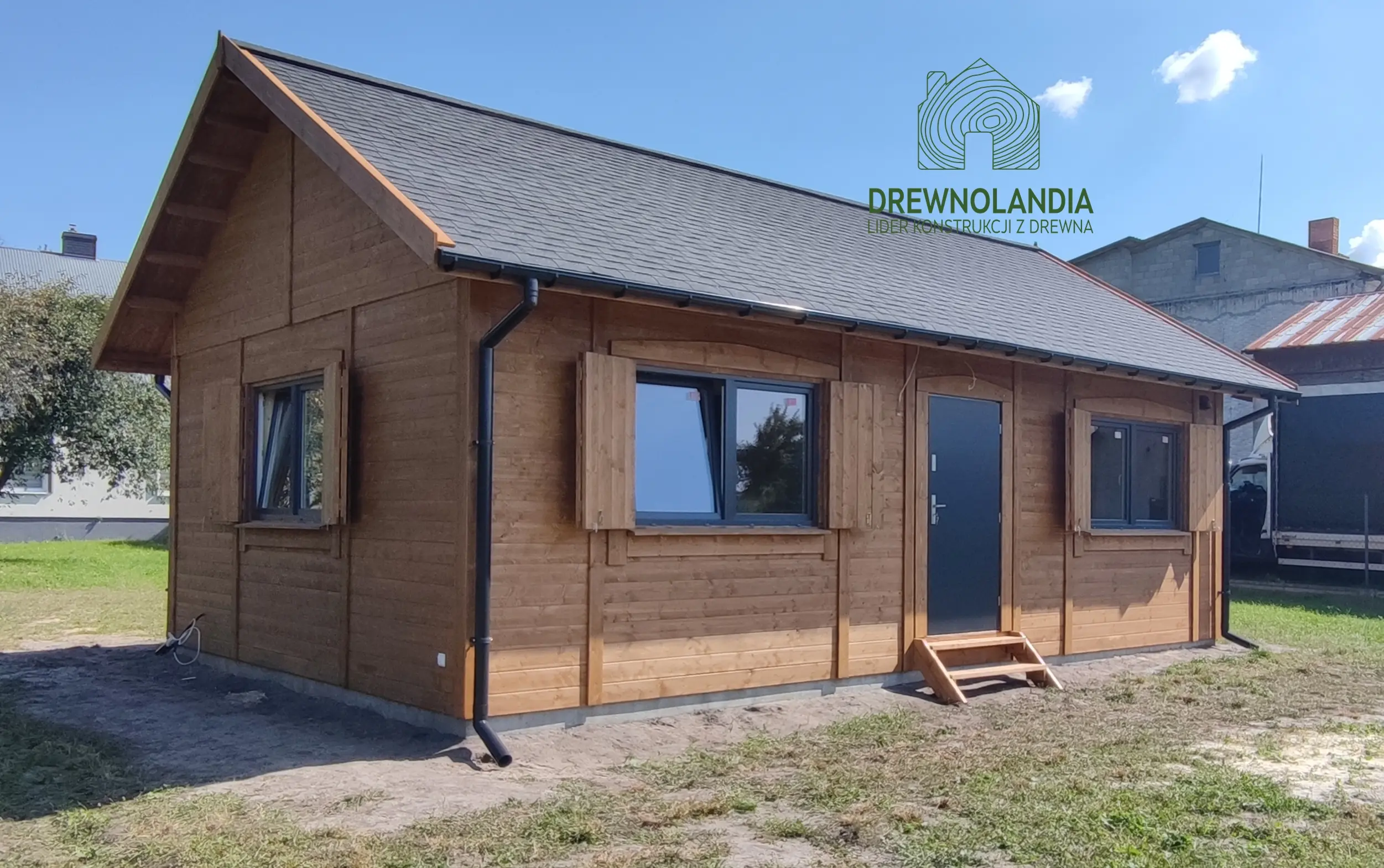
Miłosz Cabin - 54 m² (WT2021)

CLT3 House – WT2021 – 50 m² + Loft
MPZP – the intensity ratio for a building plot
The maximum and minimum size of a cabin on a building plot is precisely defined by the MPZP, i.e. the local spatial development plan, which contains many parameters concerning the given plot. Each of them is very important for the planned construction. The MPZP is separate for each locality, and even for a specific area, and takes the form of a map with information on development marked on it. In the document we will find, above all, a parameter that tells us the maximum size of a cabin on the plot. This is the building coverage ratio, extremely important from the point of view of a private investor or a business owner.
What is the building intensity ratio? It tells us the ratio of the floor area of all storeys of the planned building to the area of the plot. Interestingly, this parameter only seems easy to understand – in reality, a few pitfalls await the investor. One is that the coverage ratio also includes existing buildings and their total area; another is that not all areas are covered by an MPZP. That doesn't mean it doesn't apply to us, though. In that case, you need to apply for a decision on development conditions. The term building intensity includes:
- the maximum and minimum intensity values,
- the minimum share of biologically active area, e.g. grass, in relation to planned and existing buildings,
- the maximum building height,
- the permitted building footprint,
- the shape.
To calculate the building area value, add up the floor area of all storeys and divide the result by the area of the plot. For example, a 1000 m2 plot classified in the MPZP as having a maximum building coverage of 0.2 means that we can build a house of up to 200 m2 on it. If a structure of, say, 300 m2 has been built on such a plot, this is a violation of the regulations. This also applies to a garden gazebo.
Two terms are particularly important:
- Maximum building intensity ratio – this is the parameter that defines the maximum floor area of all storeys of a building in relation to the size of the plot. It serves primarily to protect the natural environment, but also to ensure visual consistency with other buildings in the immediate area.
- Minimum building intensity ratio – this is the term that causes the most difficulty. It ensures the rational use of all the space available on a given plot, and so prevents a very large, sprawling plot from being built on with a small structure. As a result, this term applies mainly to plots used for the technical infrastructure of a given area.
What cabin size is right for a recreational plot?
What cabin size on a recreational plot is right for most investors? It depends on both the MPZP and the private expectations of the household. Besides analysing the above document, it's also worth reviewing your own expectations and choosing a cabin design from Drewnolandia in the size you want. Sometimes a slightly smaller one will turn out better, and other times a larger, more spacious one.
FAQ:
What is the maximum cabin size on an allotment garden plot?
The maximum cabin size on an allotment garden plot is precisely defined in the MPZP – the local spatial development plan, which contains the parameters of maximum and minimum building intensity. These must be met without exception, as building law is particularly strict in this area.
What is the maximum size of a cabin on a recreational plot built on the basis of a notification?
A notification is a procedure in which you inform the relevant county office of your intention to build on the plot. Since the beginning of 2022, a recreational building for individual use with a maximum building footprint of up to 70 m2 can be built on the basis of a notification.
What is the maximum cabin size in a ROD (family allotment garden)?
ROD – as with allotment and recreational plots, the cabin size is precisely defined by the MPZP, with the difference that it applies to plots owned by the State Treasury.