Fence around the plot, whether it’s a recreational area or a home with a garden, isn’t mandatory. In many cases, however, it’s worth putting one up – to ensure privacy, security, and a tidy finish to the area. A fence effectively restricts access to unauthorized persons and animals, and on construction sites – it protects materials and equipment from theft. From this article you’ll learn when a permit is required, what types of fences exist, how to choose their height, and what else to consider.
Is a fence around the plot obligatory?
In most cases a fence is not required by law. It becomes mandatory for construction sites – according to regulations it must be fenced with a temporary fence of at least 1.5 m. Such a fence is meant to secure the construction area from access by bystanders and animals.
Legal requirements for building a fence
Is a permit or notification required?
According to the Building Law regulations:
A fence up to a height of 2.2 m (measured from ground level) does not require either a permit or notification.
A fence higher than 2.2 m requires notification to the county office, and in some cases – a building permit.
Exceptions and special cases:
A notification is also required for a fence along a public-area side, such as a road, railway or park.
A building permit is necessary when the fence is to serve as a retaining wall.
You cannot use sharp finishes (e.g., barbed wire) at heights below 1.8 m.
Gates and wickets must open inward onto the plot.
A wicket should be at least 0.9 m wide, and the driveway gate at least 2.4 m.
It’s worth noting that each municipality may have its own regulations stemming from the local zoning plan, so always check with the relevant office before starting to build a fence.
Types of fences – an overview of options
Temporary fences for construction sites
A temporary construction-site fence is mandatory and must be at least 1.5 m high. It is most often made of mesh stretched on posts spaced about 2.5 m apart.
Permanent fences – material options
For permanent fences we have many options to choose from, including:
- panel fences – durable, easy to install, economical,
- palisade fences – modern, aesthetic, offering greater privacy,
- slatted fences – good for recreational plots, providing shielding from neighbors’ gaze,
- wooden fences – natural and matched to the layout of holiday plots.
For wooden fences (e.g., boards) you don’t always need a footing – sturdy posts sunk into the ground are enough. This type of fence requires regular impregnation to protect the wood from moisture and damage.
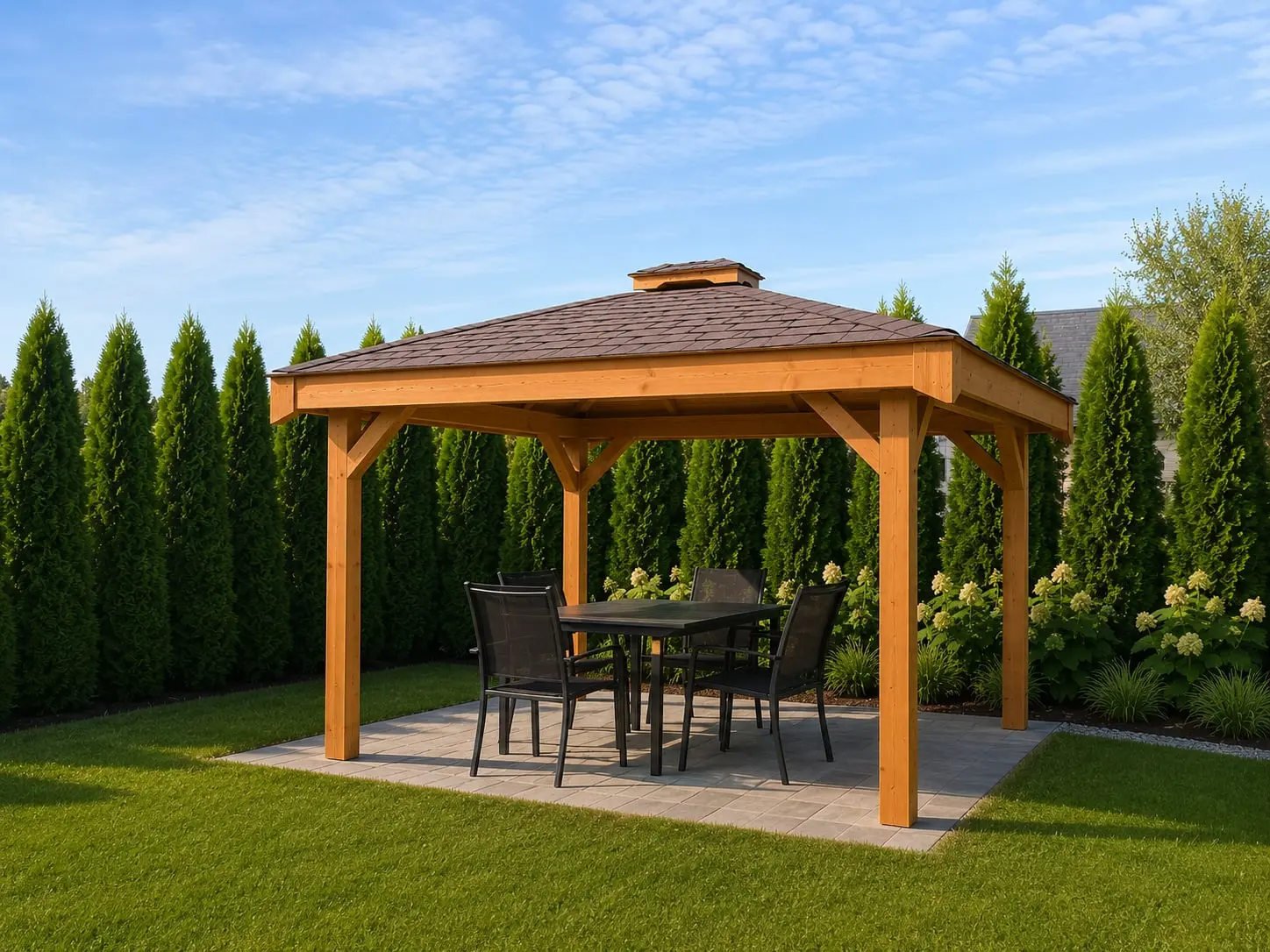
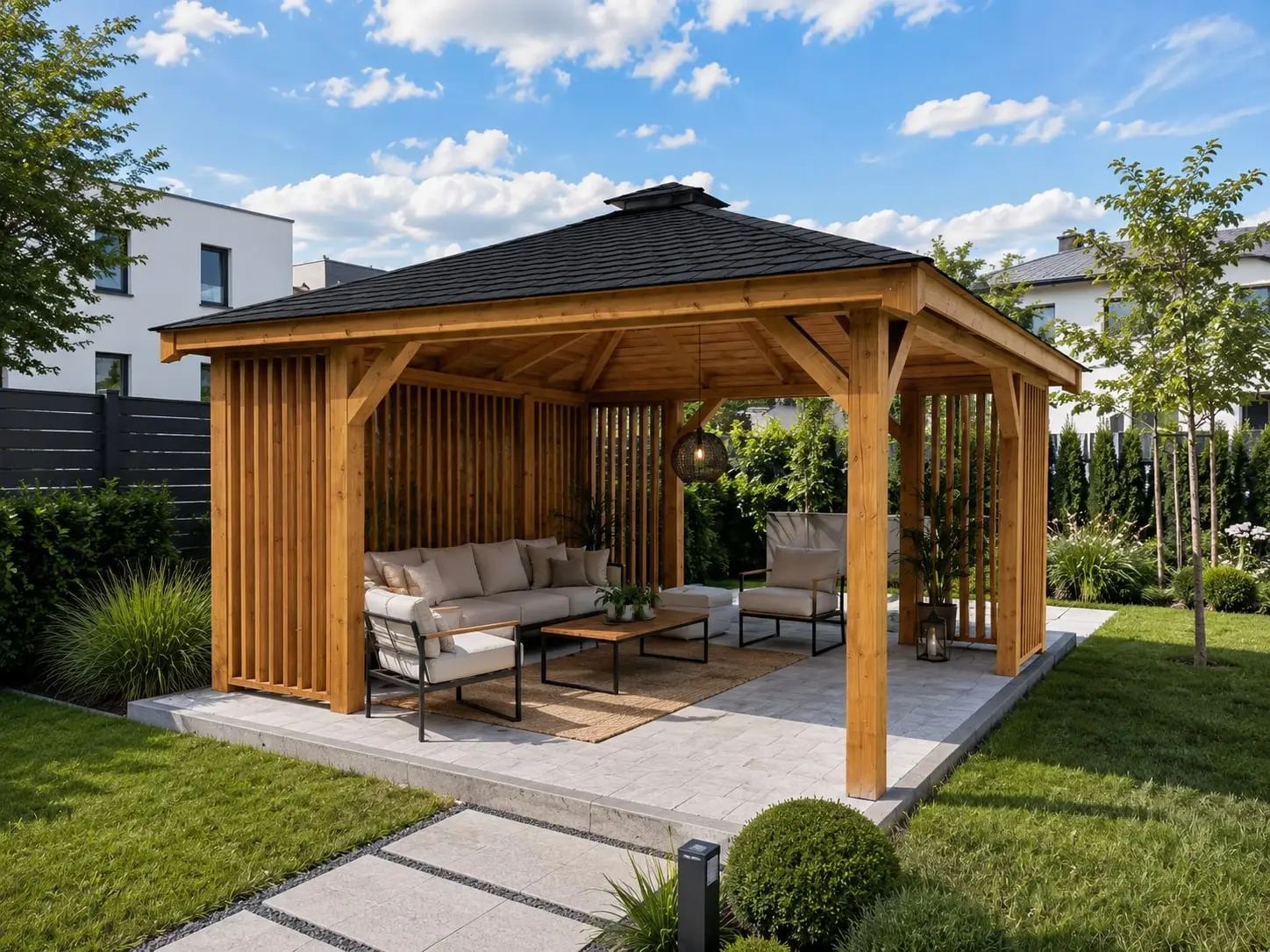
Remember that wooden fences, like other structures made of wood, such as garden gazebos, or woodsheds, will require periodic wood preservation to protect the wood from moisture, as well as dirt and dust. A durable fence made from high-quality materials will provide long-lasting protection for the plot. We write more about this in our article What wood preservative?
Technical specifications of the fence
Fence height
The optimal fence height depends on several factors:
- the fence’s function (protection, privacy, decoration),
- the character of the plot and its surroundings,
- the size of the plot,
- local regulations,
- neighbor relations.
Regulations do not impose a minimum fence height (except for construction sites), but it’s worth choosing one that doesn’t create optical barriers or unnecessary conflicts. If you want maximum privacy, a tall fence might be the best choice – as long as it complies with the rules.
Technical requirements and safety
A fence must meet certain technical and legal conditions:
- Sharp ends (e.g., barbed wire) cannot be used on heights below 1.8 m.
- Gates and wicket must open inward.
- Minimum width of a wicket is 0.9 m.
- Minimum width of a driveway gate is 2.4 m.
- For sliding gates, both the leaf and the mechanism must fit within the plot boundaries.
- Fence elements must not pose a danger to people or animals.
Remember that detailed regulations may vary depending on the local zoning plan for the area.
Relations with neighbors
When building a fence on the plot boundary, it’s worth agreeing its form, route and costs with the neighbor – preferably in writing. In case of disputes it’s wise to refer to art. 154 of the Civil Code, which governs issues of co-ownership of boundary fences.
In case of doubts about the boundary line, it’s best to commission its marking by a surveyor. Conflicts about height or material of the fence can also be discussed with a lawyer.
A fence around the plot is not only about aesthetics but also safety, compliance with regulations, and good relations with neighbors. Before starting the work, check the requirements of the local zoning plan, determine the fence height and choose materials that will serve you for years. Whether you’re building a temporary or permanent fence – opt for durability, legal compliance, and practical solutions.
Tailor the fence to your needs and possibilities – remember that a well-chosen fence is not only about aesthetics but also a greater sense of security. Before you start building the fence, check current regulations, set a start date and consult a specialist or the office. And if you’re looking for more practical tips, be sure to check out our other articles!
FAQ
What height of fence will be best for a allotment garden?
For allotment gardens, the most common choice is a fence height of 1.2–1.5 m. This height provides a sufficient sense of security and privacy without dominating the surroundings. You should also check whether the plot is on land subject to special regulations (e.g., ROD). If you want to fence an allotment, it’s worth consulting the site manager.
Can I erect a tall fence along a busy street?
Yes, but you may need to notify or even obtain a building permit. The maximum height without formalities is 2.2 m, but from the public-space side prior notification may be required. Additionally, remember that the fence should not obstruct drivers’ visibility.
What is the minimum distance of the fence from the property boundary?
The law does not specify a concrete minimum distance – fences can be erected directly on the property line. In practice, when placing along the boundary, it’s wise to agree with the neighbor. In case of dispute, a surveyor or the municipal office can help.
Do I need a permit to fence my garden in a row-house development?
In row-house developments there may be additional restrictions stemming from local zoning plans or homeowners association rules. Usually fences up to 2.2 m do not require a permit, but tailor the fence to the surroundings and neighboring properties. Always avoid infringing on shared space.
How to match the fence to the house style and plot function?
Choosing the right fence depends on the style of the building, the plot’s purpose, and individual needs. Different solutions work for a allotment garden or a modern single-family home. A well-chosen fence should also harmonize with the surroundings and provide a sense of security.
Does every fence have to have a gate and a wicket?
No, but in most cases they are practical and often required – for example for access by emergency services. Their dimensions are defined by regulations: minimum width of the wicket is 0.9 m, and gates – 2.4 m. Well-designed fence panels increase the functionality and security of the property.