
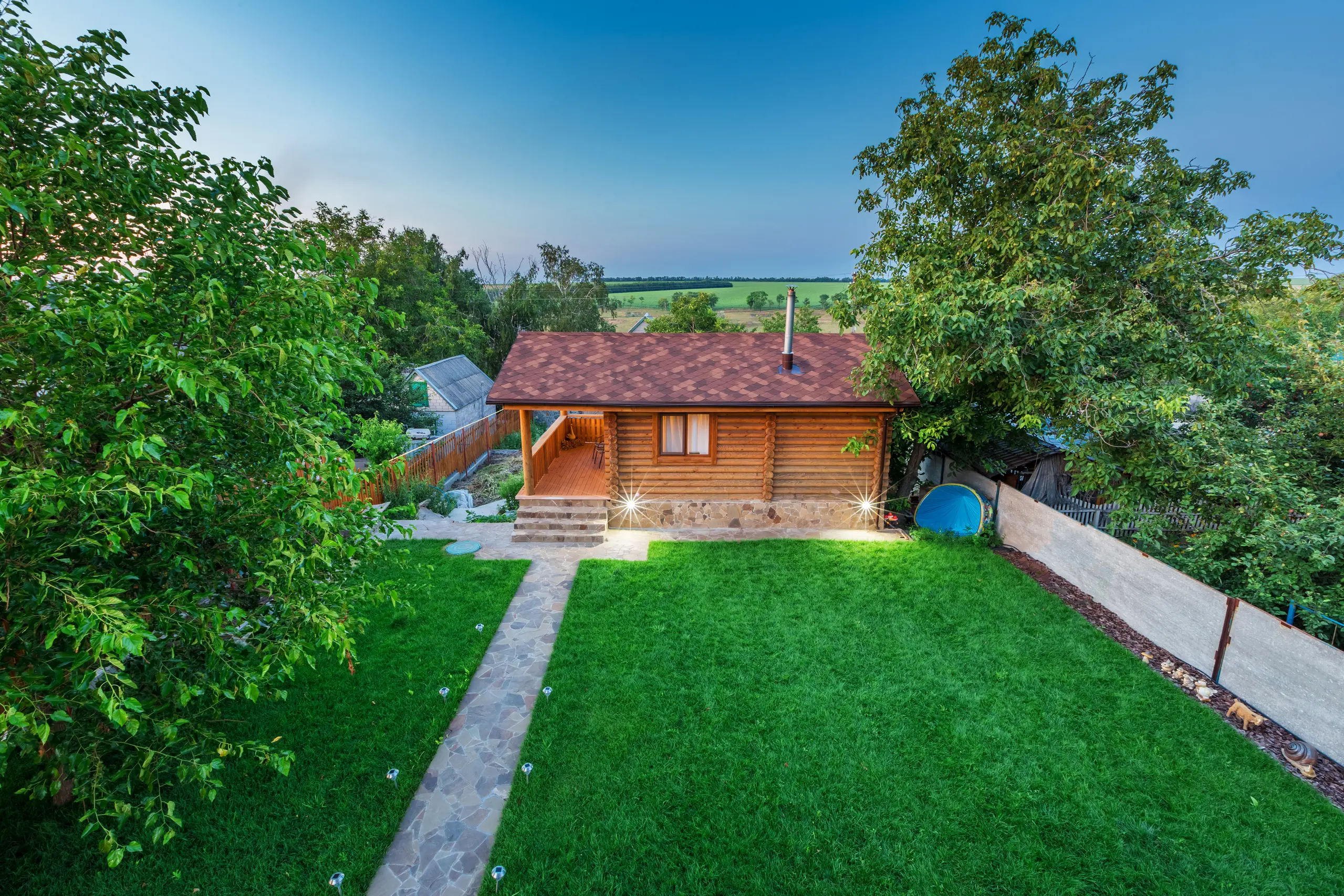
A recreational plot is usually cheaper than a building plot and located in an area with appealing natural surroundings. Before you invest in land and choose the dream holiday cabin, you should understand the specific legal conditions of this type of property. Check what you can build on a recreational plot and how to plan your investment in accordance with the regulations.
Recreational plot – definition and purpose
Although the term recreational plot is commonly used in everyday language and in listings, the building code and the Act on spatial planning and development do not define it unambiguously. In practice, this term refers to land that in the Local Spatial Development Plan (MPZP) has been marked with the symbol US (sport and recreation areas) orML(areas for holiday homes).
The primary purpose of such property is recreation. This means that, in principle, it is not intended for multi-family housing or intensive residential development. What you can build on a specific site depends mainly on the provisions of the aforementioned local plan or – in case of its absence – on the decision on Building Conditions. To learn more about land classifications, read our article on types of plots in Poland.
Recreational plot – what can be built?
The most important issue for an investor is what architecture can be erected on their land. A recreational plot usually allows the realization of objects intended for individual recreation.
Detached single-floor buildings for individual recreation – this is the most common choice. If their area does not exceed 70 m², they can be built under an notification (zgłoszenie), without the need to obtain a full building permit (while maintaining an appropriate building density – one building per 500 m² of plot).
Garden gazebos and outbuildings – structures supporting garden maintenance.
Objects of small architecture – pergolas, ponds or masonry grills.
It is worth noting that every recreational plot design must take into account parameters defined by the local office, such as roof pitch, ridge height, or the percentage of biologically active land. Detailed information about permissible floor areas can be found in our article about the size of a house on a recreational plot.
Holiday cabin on a recreational plot – seasonal or all-year?
Choosing a cabin on a recreational plot, you must decide on its standard. The wooden technology enables quick construction of both lightweight seasonal structures and solid buildings with thermal insulation.
All-year cabin on a recreational plot is feasible if the MPZP allows buildings of a residential or holiday nature with heating. Such an object visually resembles a standard single-family home, but formally it remains a recreational building. If you’re looking for inspiration, check our small cabins for a recreational plot.
Designing a recreational plot and utilities
A good design for a recreational plot is not only about the location of the building, but also about planning utilities. The key is especially connecting power to the recreational plot. This process requires submitting an application for connection conditions to the local distribution network operator. Equally important is wastewater disposal (septic tank or home wastewater treatment plant) and access to water (deep well or communal supply). Remember that lack of utilities significantly limits comfort and can affect future construction costs.
Transformation of a recreational plot into a building plot
Many owners gradually consider transforming a recreational plot into a building plot. It is a complex process and not always guaranteed to succeed. It requires changes to the records in the Local Spatial Development Plan, which entails submitting applications to the commune.
If you plan such a change, be prepared for fees. The cost of converting a recreational plot into a building plot depends on the increase in the property value after changing its designation (so-called planning fee, up to 30% of the value increase). A similar procedure applies to agricultural land – read more in the guide: “How to convert an agricultural plot into a recreational one?”.
Most frequently asked questions about recreational plots (FAQ)
Investing in recreational land involves a number of legal and technical questions. To help you make a decision about purchase or construction, we have gathered the key issues that most often raise doubts among investors.
What is a recreational plot?
It is land designated in planning documentation for holiday home (ML) or sport and recreational (US) development. It mainly serves seasonal recreation and is not intended to meet housing needs on a permanent basis.
How does a recreational plot differ from a building plot?
The main difference is the designation in the MPZP and the amount of property tax. A building plot allows constructing a residential house and permanent residency, whereas a recreational plot restricts the type of buildings to holiday homes and often has less developed technical infrastructure (utilities).
Can you place an all-year cabin on a recreational plot?
Yes, provided the structure meets the technical insulation requirements and local regulations do not prohibit buildings of an all-year nature. Formally, the building can still be classified as recreational.
How much does it cost to convert a recreational plot into a building plot?
Costs include administrative fees, surveying costs, and possibly the planning fee (up to 30% of the plot’s value increase). The total may range from a few to several dozen thousand PLN, depending on location and land value growth.
Can you live on a recreational plot?
The law does not forbid physically staying on the plot year-round. However, there is a problem with registration and the fact that recreational buildings are not intended for permanent residence under technical and building regulations, which may create insurance or other issues.
What are the conditions for a dwelling on a recreational plot?
These conditions are defined by the MPZP or the Building Conditions decision. They typically specify the maximum building footprint (e.g., up to 70 m² under notification), the building height, roof type, and the minimum biologically active land that must remain undeveloped.