
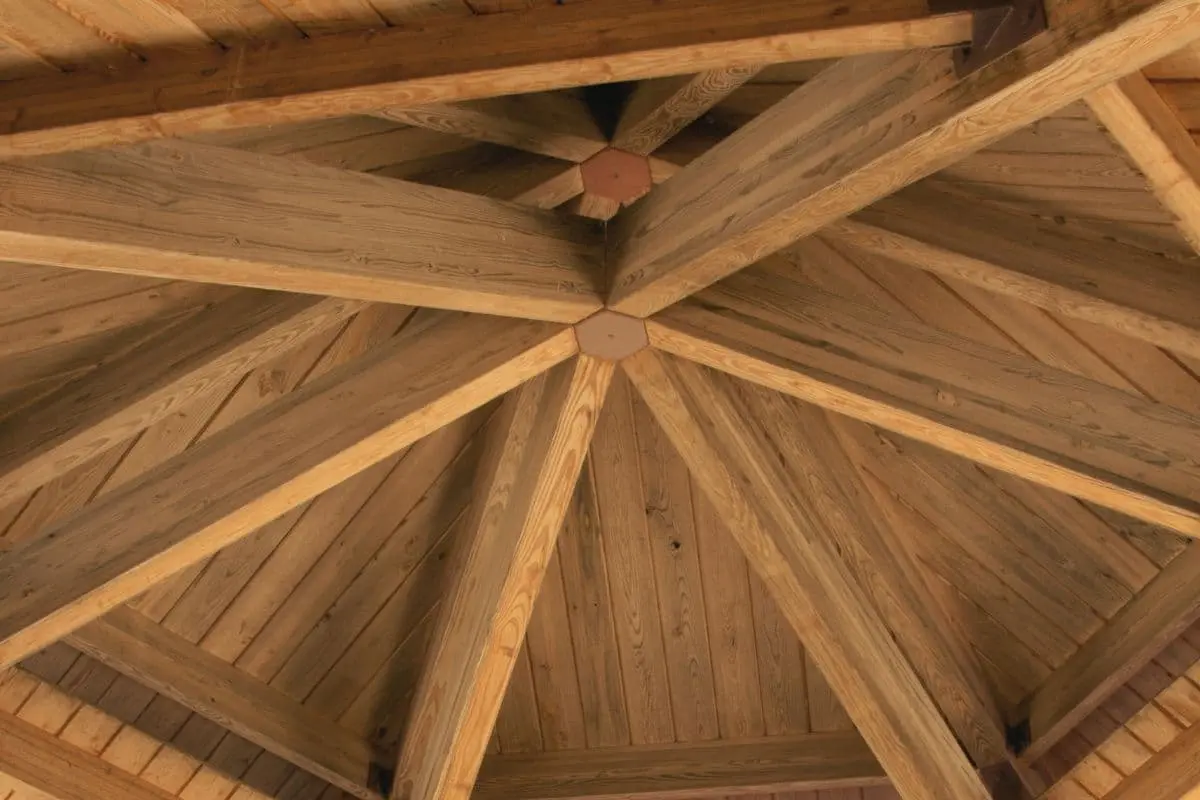
Choosing the right material for a gazebo roof is a key step in creating a functional and aesthetically pleasing recreation space. This decision will affect not only the look but also the durability and functionality of the structure. Below we present the most commonly used materials for gazebo roofing.
Before covering the gazebo roof – choosing the type of roofing
A garden gazebo can serve many functions in the garden. It is a place where the whole family relaxes, and it also enables outdoor parties. To ensure these expectations are met, the gazebo should have a roof. It provides protection from sun, rain, snow and other weather conditions.
When constructing a garden gazebo, it is important to properly design the entire structure. At the initial stage, a decision should be made on the type of gazebo roof covering. For a structure with the simplest build, a single-pitch roof or a flat roof that should be slightly pitched can be used. This is necessary to ensure rainwater runoff and to prevent snow from accumulating on the roof. For these reasons, a gable roof is most often chosen during construction.
Why is gazebo roof covering important?
A garden gazebo is built primarily for the convenience of the users. It’s a great place for a meal, a nap in the fresh air, or a gathering with loved ones. And all of this can take place regardless of capricious weather and the seasons. Of course, provided the gazebo has a roof.
Gazebos are usually light constructions. They are most often built on a rectangular plan, although other models can be found on the market. The roof of a garden gazebo, due to changing weather conditions, should be strong and provide real protection against rain, sun and wind. Therefore, it matters not only the material the roof coverings are made from, but also their proper fit to the gazebo size and the installation method, which will ensure the entire structure is stable. When choosing the covering, consider also aesthetic aspects.
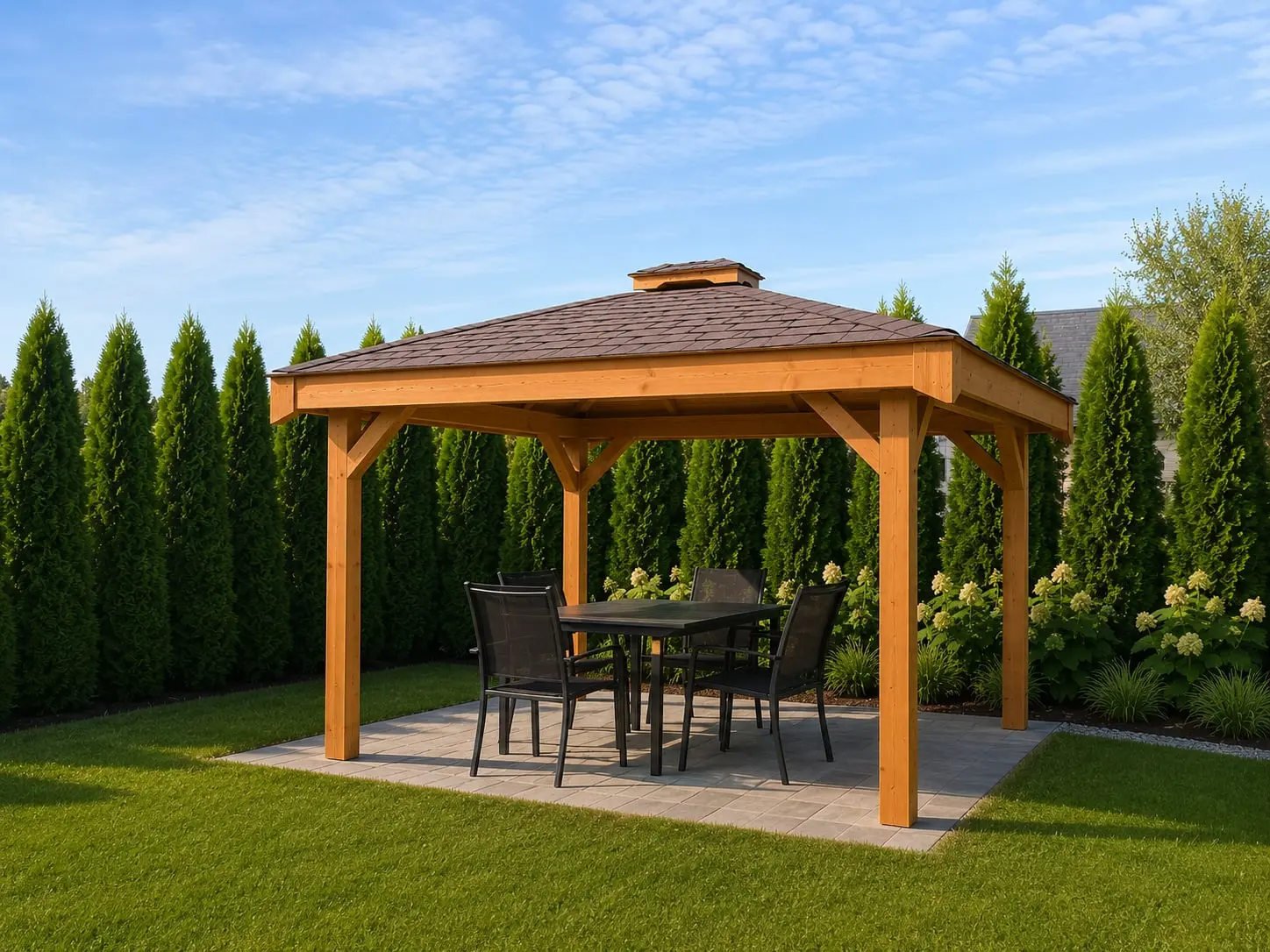
Garden Gazebo - Jowita 3m x 3m

Garden sauna 8m x 3,5m with relaxation area
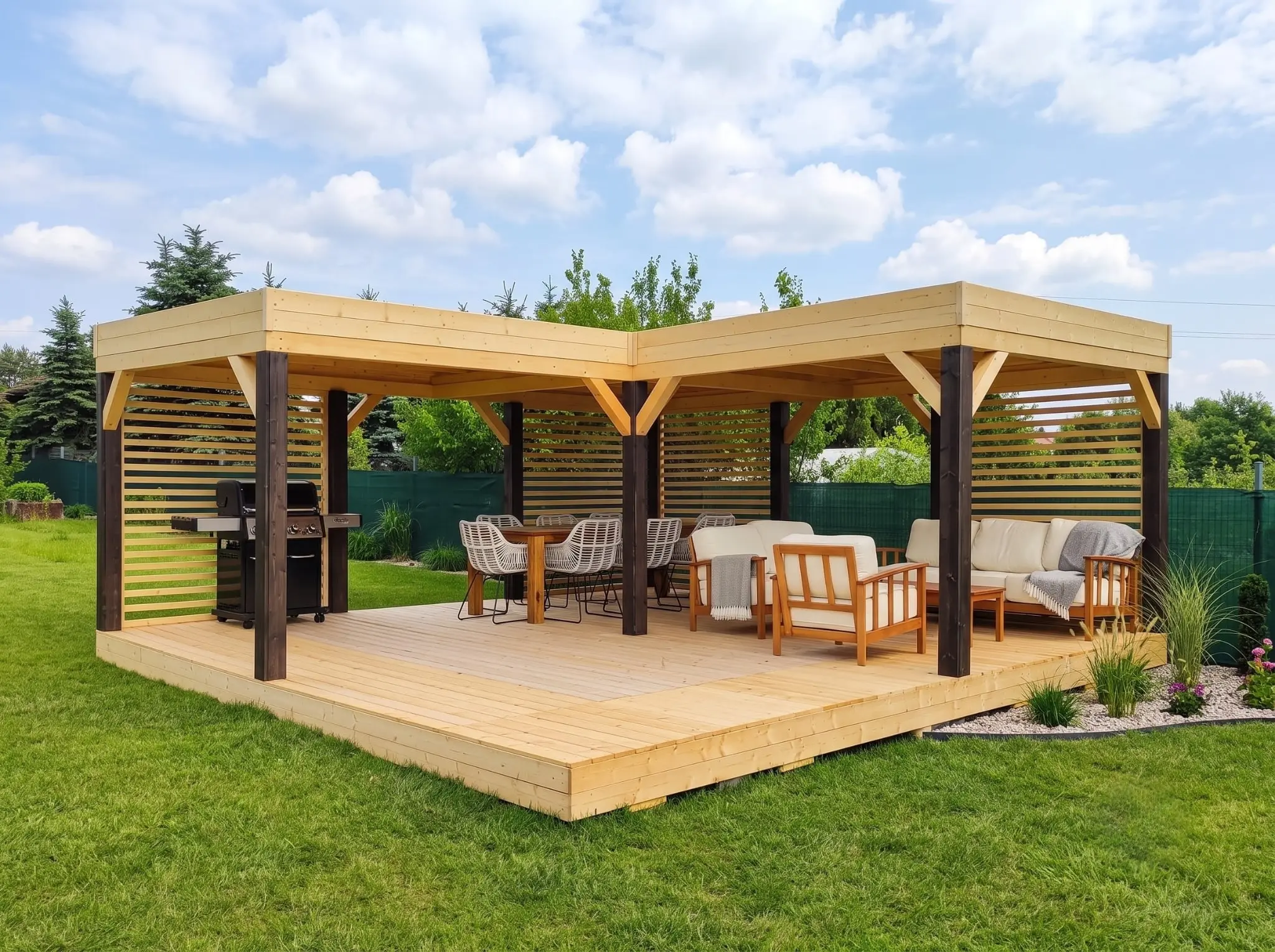
Liwia Garden Gazebo - 6m x 6m
Which material to choose for a gazebo roof?
Many people wonder which type of material will be the best choice for a garden gazebo roof. There are several materials available on the market that work well for roofing. The most popular materials used by companies building garden gazebos include such options as:
- tar paper – an inexpensive and simple way to finish the roof,
- aluminium or galvanized steel sheet – most commonly used metal sheets,
- bituminous shingle– bitumens made from oxidized or modified asphalts and one of the most popular materials,
- metal roofing tile – cheaper and lighter than ceramic roof tiles,
- thatch – the material is highly flammable and requires quite frequent replacement, so it’s more of a temporary solution.
What to cover the gazebo roof with – factors to consider when choosing a material
To a large extent, which covering we choose depends on several factors. First of all, consider the form and shape of the roof. Additionally, pay attention to the style of the garden, whether already arranged or in planning. Individual elements form a cohesive whole and are a definite design asset for green spaces.
Cost considerations are also important. Not everyone has big financial resources. Yet this certainly does not rule out dreams of a beautiful and functional garden gazebo. There are roof coverings for gazebo roofs that won’t strain your budget. The scope of construction works for the gazebo and our individual skills are also an important factor. Remember that some materials, such as metal sheets or roof tiles, require considerable skills to install properly. This is why, in many cases, hiring professionals or purchasing a ready-made garden gazebo may be a better solution.
What to put on the gazebo roof to keep costs down?
For those looking for the cheapest solutions, tar paper may prove to be the optimal choice. Its advantages are affordable price and simple installation. Unfortunately, tar paper isn’t very durable and resistant to external factors. Under prolonged exposure to moisture, water, or sunlight, it can crack, peel, or crumble. Tar paper usually serves its function for only about a year. It may turn out that the roof will need refreshing before each season.
Gazebo roof covering – bitumen shingle as a way to achieve reliability and durability
Another option for covering the roof is tiles or metal. This is a much more aesthetic and durable solution, but also more expensive. A major advantage is the material’s durability. A roof covered with tiles or metal is watertight and resistant to weather conditions. But is it the best solution?
Cheaper, yet just as durable and resistant to damage as tiles, is bituminous shingles. It is most often made from softwood. It is a wedge-shaped board with a groove along the long edge. Bitumen shingles are divided into two groups: sawn shingles and cut shingles. The first is produced by hand, while the cut shingles are produced with a saw.
With bituminous boards, the roof covering is always a solid surface. Before laying it, make sure the garden gazebo roof is decked. In our shop, decking and shingle covering in your chosen color are included in the installation price!
Roof covering for the creative, i.e., leftovers from the home build
When deciding what to cover the gazebo roof with, sometimes it’s worth considering materials that remained from building a house. However, this solution is mainly for those constructing a gazebo soon after finishing the build. Such a roof covering is certainly a saving. It allows giving a second life to what would otherwise go to waste, or to the garage.
We can also opt for, among others, finishing the gazebo roof with offcuts of metal roofing tiles. It’s quite light, which significantly reduces DIY installation issues. Using leftover building materials also has another big advantage – it helps achieve a cohesive look for the property.
FAQ:
- What to put on the gazebo roof?
Most commonly, bituminous shingles, tar paper, metal roofing tile or reed are used to cover a gazebo roof, but one of the strongest materials is a shingle.
- What is the cheapest way to cover a garden gazebo roof?
The most economical solution would be covering the roof with tar paper or bituminous shingles. With the caveat that the latter option is much more durable.
- Is bituminous shingle a good solution for covering a gazebo roof?
Bituminous shingles are a very durable and watertight material, making them excellent for gazebo roofs. It is worth using them, for example, for a gazebo with a steep roof, where the slope is at least 12 degrees.