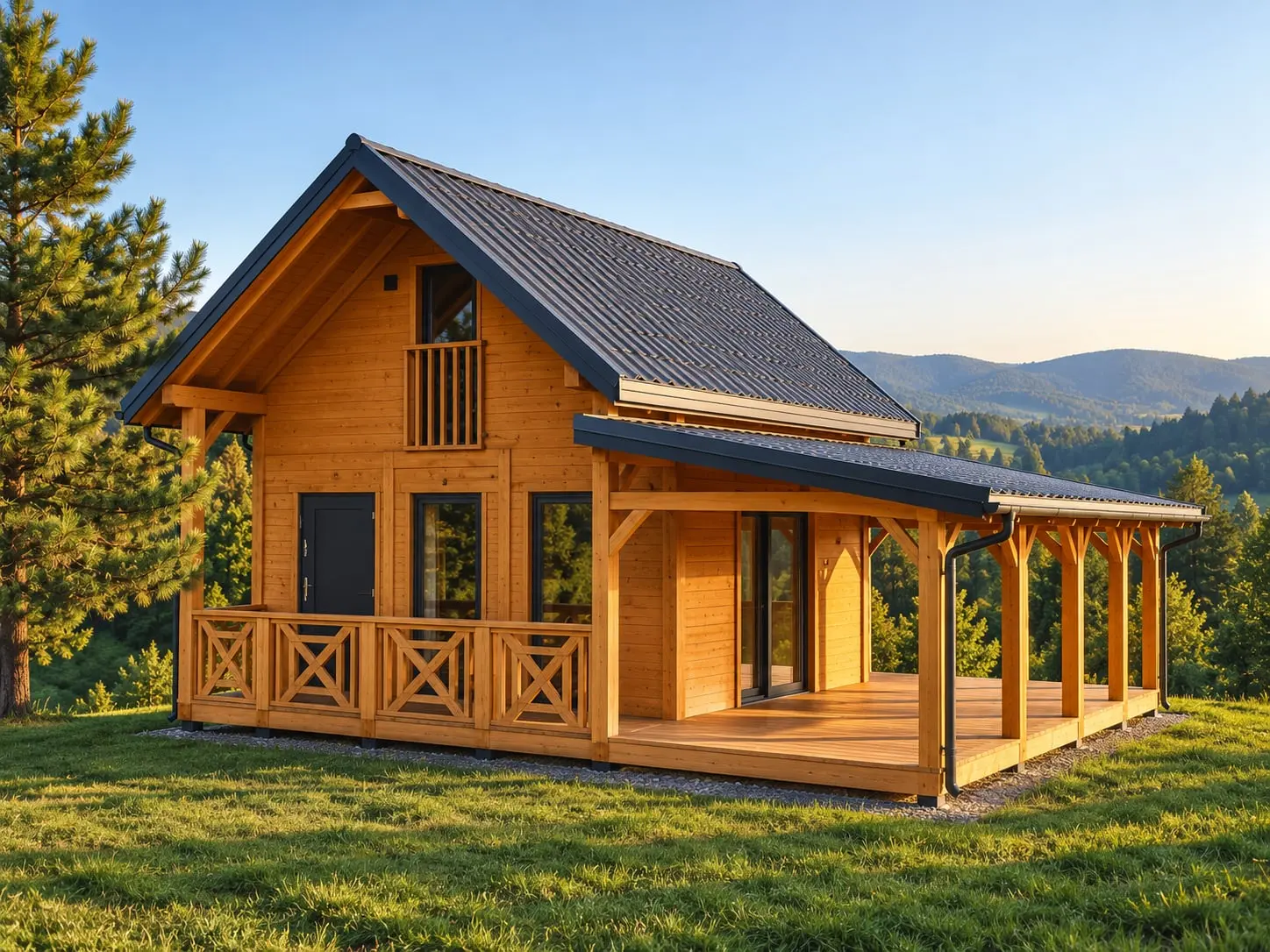
Buying forest land is often tempting thanks to its attractive price and closeness to nature. However, before you can start turning your vision of a cabin among the trees into reality, certain requirements must be met. Plots of this type are subject to strict building restrictions, so it is worth getting to know them before you buy forest land.
What is forest land? The definition under building law
According to the land and building register, forest land is land designated with the class "Ls", meaning forest. This designation does not necessarily mean the plot is densely wooded – formally, what counts is the legal status of the land, not just its current vegetation. Forest land is intended for forestry and is under special protection, which translates into restrictions on development.
Building law and forest land protection regulations (including the Forest Act) clearly state that land classified as "Ls" is not intended for development. This means that on forest land you cannot start building anything – neither a house nor an outbuilding – until its status has been changed.
Land classification and plot designation
The status of a plot (forest, meadow, wasteland, arable land, afforested land, etc.) is hugely important. If the land is marked "Ls" in the register, it is forest, and a development ban applies. If, however, the plot is, for example, "afforested" (e.g. marked "Lz") or has a status other than forest, there is a chance that, once the formal conditions are met, it will be possible to obtain a building permit. That is why it is so important to check the property's land register documentation. It is also worth learning about other types of plots – including building, agricultural and farmstead plots – before deciding on an investment. Many of them impose far fewer building restrictions than land classified as forest.
Who can buy forest land?
Anyone can buy forest land – both private individuals and companies. There are no formal bans on individuals acquiring land classified as forest. However, owning the land does not automatically give you the right to build on it. In the end, what matters are zoning plans, the consent of the relevant authorities and a change of land designation.
What can you build on forest land?
Essentially – nothing. If a plot has the "Ls" status, a residential house, a holiday cabin and an outbuilding are all prohibited. Only after the land has been converted (excluded from forest production) can there be a chance of legal development.
The only exception may be temporary or mobile structures (e.g. trailers, cabins on wheels without a permanent foundation) – but this solution is of limited use and is often legally controversial.
How to convert forest land into building land?
Converting forest land into building land is a complex and lengthy process that requires meeting a number of formal conditions. The first step is to check whether the plot is covered by a Local Spatial Development Plan (MPZP) or – if there is no MPZP – whether development conditions can be issued. Next, you need to submit an application to exclude the land from forest production – the decision is issued by the relevant authority (e.g. the starost or the regional forestry directorate). Only after the formal deforestation and reclassification of the land can you apply for a building permit.
How can forest land be used?
If building is not your goal, forest land can serve as a recreational or hunting plot, for breeding, as a source of wood, and as a place of quiet and contact with nature. The owner can also plant new trees or carry out forest management (as long as the land is not subject to restrictions), although any tree felling is regulated.
For those who dream of a home among the trees, the solution may be to buy a "building plot with trees" or a building plot bordering a forest – combining natural assets with the possibility of development. This approach, and an awareness of the differences between land types, often helps avoid costly mistakes.
Frequently asked questions about forest land
Below we have gathered a few of the most common questions about forest land, its development options and the restrictions resulting from the law.
Can you build a holiday cabin on forest land?
No – unless the plot is formally "deforested" and reclassified. Even the simplest holiday cabin – even one with an area of up to 35 m² – requires a change in land designation.
How much does forest land cost?
The price depends on the location, size and nature of the plot's status. Forest land that cannot be built on is often significantly cheaper than building land. However, bear in mind that only after conversion can it reach a value close to that of building plots.
Can you build a house on forest land?
No – at least not until the plot has been formally converted. The "Ls" status in the land register effectively blocks any permanent development.