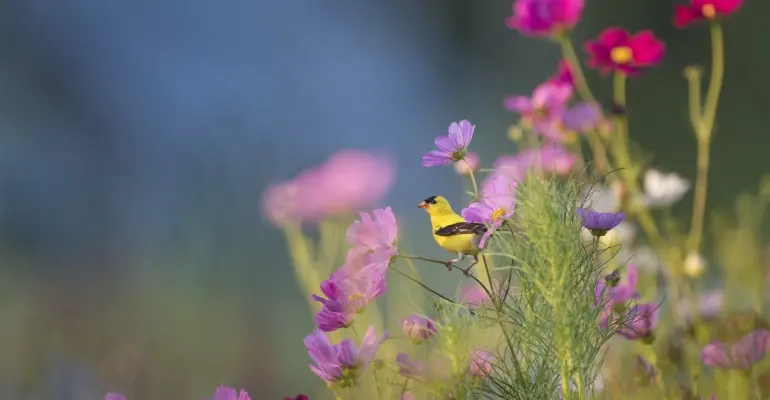
The monotonous, dull look of modern gardens dominated by lawns and conifers is increasingly being enriched with all-year plants. Looking around, though, you'll notice that many people tend to choose rhododendrons. Yet flowering plants can be selected so as to create a truly dream garden – colorful, natural, friendly to pollinating insects and full of life all year round.
Where to start when creating an all-year garden?
Build a base of trees, ornamental shrubs and perennials
When designing the surroundings of your house, it's worth starting with a composition of trees, ornamental shrubs and perennials that will serve as the base of the final arrangement, completed with low perennials, bulbous flowers and annual seasonal plants. All-year shrubs make an excellent garden base, ensuring durability and attractiveness throughout the year.
Evergreen and semi-evergreen deciduous shrubs and conifers always work well as a backdrop – they look beautiful even outside the growing season, for example thanks to colorful shoots. Pay attention to common boxwood, which stands out for its durability and good looks, as well as to junipers, Sawara cypress, white spruce and common juniper – examples of coniferous plants with various forms and uses, ideal for the garden, patio or balcony. These shrubs can be used to create hedges that are not only functional but also decorative, providing privacy and enhancing the look of the space.
Enrich the space with structures and climbers
Garden structures are also a great addition to the space, including pergolas with climbing plants, which give pleasant shade on hot days and protect from excessive sun. It's also worth considering planting shrubs and small trees in pots, which allows you to shape the space flexibly and create attractive arrangements on a patio, balcony or in your dream garden. The lower areas should be planted with tall perennials, ornamental grasses and subshrubs, which hide the less decorative branches and forks of the shrubs. Only plantings prepared this way should be completed with small perennials and seasonal plants.
Which plants to choose for a garden that blooms all year?
For garden flowers to delight with their beauty all summer and in the months that follow, you need to select flowering species so as to ensure seasonal continuity. It's worth considering which species to choose to keep the garden attractive all year round – perennials are especially recommended, as they guarantee a long flowering period and minimize the need for yearly replanting. Choose varieties resistant to low temperatures and drought that overwinter in the ground; your choice will depend on the soil type and growing conditions.
Spring-flowering species
A garden enriched with flowers that bloom as early as February starts to delight with color. The first to flower in early spring is the mezereon (Daphne mezereum), followed by hybrid witch hazel (Hamamelis intermedia), hellebores (Helleborus), winter aconites (Eranthis hiemalis) and snowdrops (Galanthus nivalis). Spring crocuses (Crocus vernus) and snowflakes (Leucojum) bloom too.
A little later, in March, dogwoods (Cornus), rock cresses (Arabis), wood anemones (Anemone nemorosa), pheasant's eyes (Adonis vernalis) and primroses (Primula) come into flower. The first common daisies (Bellis perennis) appear as well, along with sweet violets (Viola odorata).
In April and May, gardens are ruled by tulips (Tulipa), hyacinths (Hyacinthus), daffodils (Narcissus), grape hyacinths (Muscari) and forget-me-nots (Myosotis). During these months gardens are also adorned by early varieties of rhododendrons and azaleas (Rhododendron), as well as magnolias (Magnolia), flowering quinces (Chaenomeles) and many other trees, shrubs, perennials and seasonal plants.
It's also worth planting hostas and heucheras, which as perennials do very well in shady parts of the garden and start growing in spring, adding appeal to flower beds. Early flowers attract bees, which are important pollinators in the garden.
Summer ornamental plants
The summer months are the flowering time mainly for daylilies, roses (Rosa) and lilies (Lilium). Pay attention to Jerusalem sage, which delights in summer with intense blooms and is an attractive perennial that draws pollinating insects. Flower beds fill with marigolds (Tagetes), tuberous begonias (Begonia tuberhybrida) and wax begonias (B. semperflorens), flossflowers (Ageratum houstonianum), zonal geraniums (Pelargonium hortorum), China asters (Callistephus chinensis), zinnias (Zinnia elegans) and garden verbenas (Verbena hybrida).
In summer, climbers provide pleasant shade and protect from excessive sun.
In the summer months we of course enjoy long-flowering perennials, as well as panicle hydrangeas (Hydrangea paniculata), which often have beautiful white flowers and bloom for a long time. Many summer flowers also delight with lovely pink blooms, which further enhances the decorative value of the garden.
In summer, plants need special care – remember to water regularly and keep the soil moist so they survive drought and stay healthy throughout the season.
Autumn-flowering plants
Autumn is the time when plants prepare for winter, finish their flowering cycle or go dormant. In late autumn, heathers (Calluna), bushy asters (Aster dumosus) and autumn crocuses (Colchicum autumnale) bloom. Late varieties of roses and bigleaf hydrangeas (Hydrangea macrophylla) also appear at this time; their different varieties come in many colors and have different planting requirements.
Remember that proper planting in autumn helps plants establish well and develop healthily in the following season. Some plants need protection from frost in autumn, while others overwinter in the ground without any problem.
The garden flower season ends around the turn of October and November with late varieties of chrysanthemums (Dendranthema) and garden daisies that overwinter in the ground (Chrysanthemum hortorum).
Planning a flower bed step by step
When choosing flowers for the garden, all-year plants need to be planned by considering not only the height of the plants or their flowering time, but also their habitat needs, growing conditions and the color of the flowers – white and pink flowers deserve particular attention, as they make an attractive element of the composition. When planning a bed, you should also take into account the variety of species, such as trees, shrubs and perennials, and whether they can be grown in a given spot. In addition, it's worth considering the style of the planned bed, the theme of the composition and how well it fits its surroundings. Some plants, besides showy flowers, have ornamental leaves that are decorative all year round.
When designing a garden, you also can't overlook how aggressively perennials spread or, for example, the need to dig up the tubers and bulbs of seasonal plants. If we want the plants to go well together, we can opt for repeating color groups, such as pink and white. Remember that some flowers bloom only in spring, which affects the seasonality of the bed and calls for a carefully considered choice of species.
In addition, it's worth planting the chosen plants in larger groups, because single specimens don't catch the eye and bring chaos to the surroundings. Too many species also make care tasks difficult, so plant care should be adjusted to their requirements to ensure healthy growth and a beautiful look all year round.
Fertilizing and mulching – the key to healthy, flowering plants all year round
To enjoy beautiful, lush, flowering all-year plants, regular fertilizing and mulching of perennials is essential. In the garden as well as on a patio or balcony, all-year plants need proper care to keep their decorative value regardless of the season. Fertilizing supplies plants with the nutrients they need, which support their growth, abundant flowering and resistance to disease. Mulching, in turn, helps retain soil moisture, limits weed growth and protects roots from extreme temperatures.
Ornamental shrubs such as hydrangeas, spiraeas and firethorns are an excellent choice for those who want to enjoy greenery all year round. However, to look their best they need regular fertilizing and mulching, especially during periods of intense growth and flowering. All-year plants, grown both in pots and in the ground, need individually tailored care – so it's worth learning the requirements of a specific variety before deciding to plant it in your garden. When choosing a shrub variety, let's pay attention to its soil requirements and site preferences – that way our garden will delight with beautiful flowers and healthy plants all year round.
Protecting plants before winter – how to prepare your garden for the cold months
The approaching winter is the time to prepare your plants properly for the cold months. Proper care will keep the garden healthy and decorative even in low temperatures. An evergreen plant such as common ivy needs special attention – it's worth protecting its roots with a layer of mulch, which will keep them from freezing and help retain moisture in the soil. The dark green leaves of some ornamental shrubs, for example Caucasian cherry laurel, can be sensitive to frost, so it's worth covering them with horticultural fleece or evergreen branches.
Regular watering before the frosts arrive and mulching are key measures that will help plants get through winter in good condition. Remember that not only plants in the ground but also those grown in pots on a patio or balcony need protection from low temperatures. Common ivy, hollies, firethorns and other ornamental shrubs will repay you with a lovely look in spring if we take proper care of them in winter. Thanks to proper care, our garden will delight with greenery and healthy leaves all year round.
Take care of your plants
If you decide on a flowering garden around a holiday cabin or another structure, you need to know that proper cultivation and plant care are key to keeping the garden in bloom all year round. Plant care includes not only fertilizing and removing spent flower heads, but also regular watering, especially during drought and in periods of low temperatures. Remember that some species are resistant to harsh weather conditions, including low temperatures, while others need protection from frost. That's why we recommend a garden that blooms all year to hobbyists who are willing to devote a good part of their free time to it.
Take care of your dream garden today – plan your flower beds, choose the right plants and enjoy the colors all year round!
FAQ
Will a garden that blooms all year work in the shade?
Yes, but it requires choosing suitable shade-loving species. Good options include hellebores, hostas, plantain lilies, heucheras and some hydrangeas. It's also worth choosing all-year plants that keep their decorative value regardless of the season.
Which plants bloom in the garden in winter?
In winter, hellebores (e.g. Helleborus niger – the "Christmas rose"), witch hazels and fragrant viburnums bloom. They are not very numerous, but when well chosen they can add an interesting touch of color in the cold months.
Which flowers should I plant to make my garden attractive early and keep it blooming for long?
Species resistant to changeable weather that bloom from early spring until late autumn are a good choice. Among them are primroses, hellebores, phlox and showy stonecrop, which delights precisely in early summer and autumn.
Can an all-year garden be created in large pots?
Yes, especially on patios and balconies. It's worth choosing all-year plants with a compact habit, e.g. boxwoods, lavender or miniature hydrangeas. Also remember to protect the pots from frost in winter.
Are seasonal plants necessary in an all-year garden?
They are not mandatory, but they help fill the gaps between the flowering waves of perennials. Annual species, such as pelargoniums or zinnias, can be easily replaced, which keeps beds lively throughout the summer.
How to plan watering in an all-year garden?
It's best to use an automatic irrigation system, especially for large plantings. During droughts, water early in the morning or in the evening to limit evaporation and give plants optimal conditions.
Which plants work in a garden that doesn't require much work?
It's best to choose species resistant to drought, frost and disease, such as showy stonecrop, rudbeckia, coneflower or miscanthus. They are decorative, low-maintenance and ideal for gardens you want to enjoy without spending too much time on them.