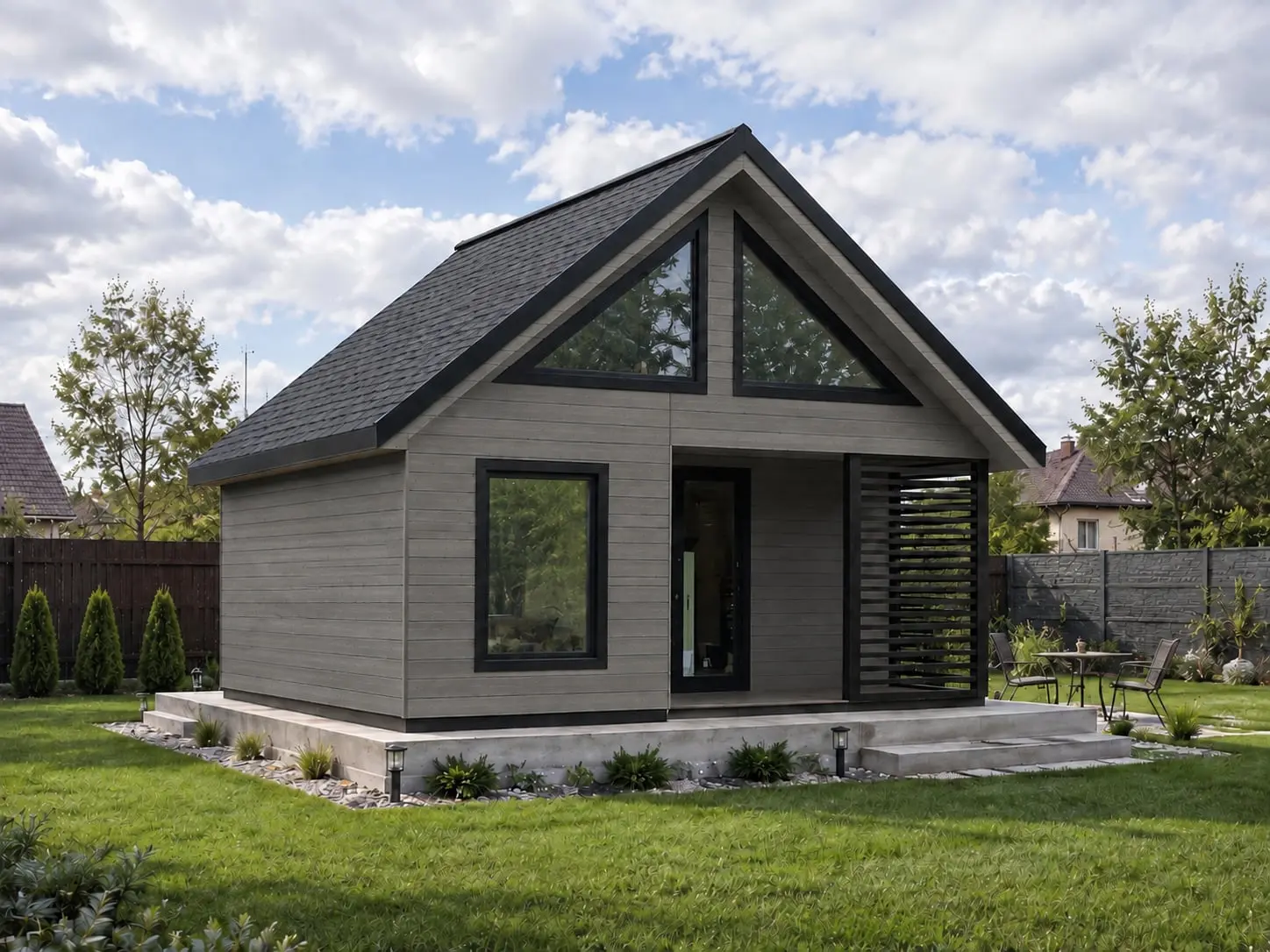
Despite its name, a holiday cabin can also be used in spring, autumn and even winter. The condition is that it is adapted for all-year use. One of the things to think through during the assembly of the structure is which solutions will let you heat your holiday cabin effectively. So how do you heat a holiday cabin and ensure proper insulation of a wooden cabin? What will help keep heating costs down?
Heating a holiday cabin – an important need or an unnecessary extra?
Many people think heating a holiday cabin is unnecessary, especially if they mostly stay there in July or August. However, it is worth noting that this type of building can also be used in other months. And even if no one plans to use the holiday cabin in winter, thermal comfort may still prove a lifesaver. That's because even on summer nights the temperature is often not as high as you would expect. In such cases, heating the holiday cabin saves holidaymakers from piling blankets on top of themselves. So even if heating the cabin is an additional expense during construction, it significantly increases the comfort of the people using it.
Winter in holiday cabins
People who often spend weekends in their cabins throughout the year also decide to heat them. Who wouldn't sometimes like to escape the big city and relax for a few days in a picturesque setting? With the right solutions, this is possible even during the cold winter weeks. What's more, a holiday cabin is also a great place to host various family gatherings or celebrations. Many of them fall in autumn, winter and spring, so it is worth providing heating in holiday cabins so that none of the guests gets cold.
How to make heating a holiday cabin more effective?
Before deciding what heating to choose for a wooden holiday cabin, you should make sure the structure is insulated. Skipping this step may result in as much as 30-35% of the heat escaping from the rooms! These are very large losses, which can not only make staying in the cabin less comfortable, but also push up heating bills. Therefore, if you want to stay in the structure in autumn or winter, it is a good idea to invest in insulation. All the more so because thermal insulation also works in summer, protecting the interior from overheating in the sun.
Insulation for thermal comfort – what to look out for?
How do you insulate a holiday cabin? If your budget only allows for the basics, at least make sure to insulate the walls. Mineral wool works well in wooden cabins. Airtight windows and doors, which effectively reduce heat loss, also help maintain thermal comfort. Otherwise, cold air can quickly start to get into the rooms. The structures offered by Drewnolandia can be fitted with PVC windows and insulated exterior doors, which make heating the holiday cabin even more efficient.
Heating a holiday cabin – stove and chimney
If we want to achieve the desired temperature, we need to choose our preferred method of heating the holiday cabin. A stove with a chimney is among the heat sources commonly chosen when a cabin is being built. That is why it is worth considering the assembly of an insulated chimney made of double-wall pipes filled with mineral wool. It makes it possible to vent exhaust gases from the interior of the building, regardless of the type of stove you choose.
Advantages of a stove and chimney in the building structure
This kind of cabin insulation requires neither a brick flue nor a foundation. It can safely be installed outside, against the wall of the holiday cabin or other fixtures. It is worth noting that insulated chimneys are resistant to adverse weather conditions and are non-flammable, which increases safety inside the building.
How to heat a wooden holiday cabin with a chimney?
How do you heat a holiday cabin that has an insulated chimney? It is used to vent the exhaust gases produced by burning the following fuels: wood, coal, coal slack and other solid energy fuels. However, it is worth remembering that Drewnolandia offers this solution only when the roofs of the holiday cabins are covered with bituminous shingles rather than metal roof tiles. What's more, the chimney itself is not responsible for heating. For that purpose, it is also necessary to install a freestanding stove, colloquially known as a "koza" (wood-burning stove).
If we fit it with a special fireplace insert, which improves the efficiency of this solution, we will ensure an optimal temperature and make staying in the holiday cabin even more pleasant. It is also possible to use a system that distributes heat evenly throughout the whole structure.
What heating method suits small holiday cabins?
A freestanding "koza"-type stove can help heat holiday cabins with a small floor area.
Thanks to it, we can raise the temperature in a room in a short time. What's more, it works wonderfully as a decorative element in a holiday cabin. Whether we opt for a classic fireplace or a stove, we need to remember that a stove requires a constant supply of fuel to work flawlessly and provide the desired thermal comfort.
Electric heaters in a holiday cabin — why choose them?
Many people who spend a significant part of their free time in holiday cabins also opt for electric heating. Why? The main advantage of this solution is that it is self-operating. In this case, we don't have to remember to add wood to the stove regularly — thanks to electric heaters, all the rooms will be warm. It is a good solution especially for those who are bothered by the fact that a stove mainly heats one room.
Holiday cabins – an economical heat source
How do you heat a holiday cabin without overpaying? An electric heater is also an excellent choice for anyone who wants to optimise heating costs. This modern solution lets you set the temperature to which individual rooms should be heated and specify the time after which the heaters should switch off – which saves a huge amount of electricity.
What's more, with this type of installation, it is possible to quickly warm up cooled rooms, e.g. after arriving at the holiday cabin following a long absence. It is worth noting that many people combine the two solutions described – for example, they put a stove in the living room, and opt for electric heaters in the bedroom or bathroom.
How to heat a holiday cabin? Alternative methods
Another increasingly popular form of heating is heating foils. These are essentially a flat type of heater, fully flexible and resistant to damage. Thanks to their size, they are placed on the floor directly under the floor panels, which allows heat to be distributed evenly and efficiently across the entire area of the building.
Another way to ensure thermal comfort for people staying in the cabin is gas heating. A gas installation is fairly rarely chosen as the preferred form of heating, as the necessary utilities are often lacking. Where this is not a problem, it is a solution that is very convenient to use.
If we cannot or do not want to connect the structure to the gas network, we can invest in a portable gas heater, but in this case we must remember to replace the gas cylinder regularly. Mobile gas heaters are great because of how handy they are – we can place one literally anywhere. They are also an inexpensive solution, and therefore a good one if you don't stay in the cabin very often. On the other hand, this choice also involves a risk of ignition, which may stress some household members.
Underfloor heating will also certainly work well in a holiday cabin. Heating panels do not dry out the air, give a feeling of luxury and provide comfort at a lower temperature than, for example, electric heaters. This means they save money during use. Electric underfloor heating is also cheaper to install than, for example, water-based heating.
Oil-filled radiators can also spread pleasant warmth in selected rooms, serving as an additional element of the heating system, especially in winter. They retain heat for quite a long time and are adjusted manually, but they are slow to "warm up" and do not heat rooms as quickly as other methods.
Heating is also possible with an infrared heater, and hybrid panels are used as well. This is an option for holidaymakers who absolutely love winter getaways or whose holiday cabin is located near a beautiful ski slope. Such a choice works well in well-insulated structures that are often used in winter. An infrared heater provides quick, energy-efficient warmth, and in the hybrid version also distributes the temperature evenly. The only drawback is the high cost – though it is better to think of it as an investment in pleasure!
FAQ:
- Is heating a holiday cabin necessary?
Heating a wooden cabin may prove necessary if we intend to spend our free time there in the colder seasons as well. It lets us maintain a constant temperature in every room. It will come in handy in most cabins, because even on summer nights the low temperature can be a nuisance.
- What heating system should I choose for a holiday cabin?
An optimal temperature in a holiday cabin can be achieved with, among other things, a "koza"-type stove or electric heating – electric heaters or electric underfloor heating. Gas heating or a portable gas heater powered by a cylinder can also be a good idea. Some people also opt for oil-filled radiators.
- How to choose the right heating for a holiday cabin?
Before choosing the right solution for colder days, it is worth thinking above all about your own needs. Usually, electric heating is installed in this type of structure, or a stove or fireplace is fitted. Let's also not forget that the most important thing is the safe use of the system.