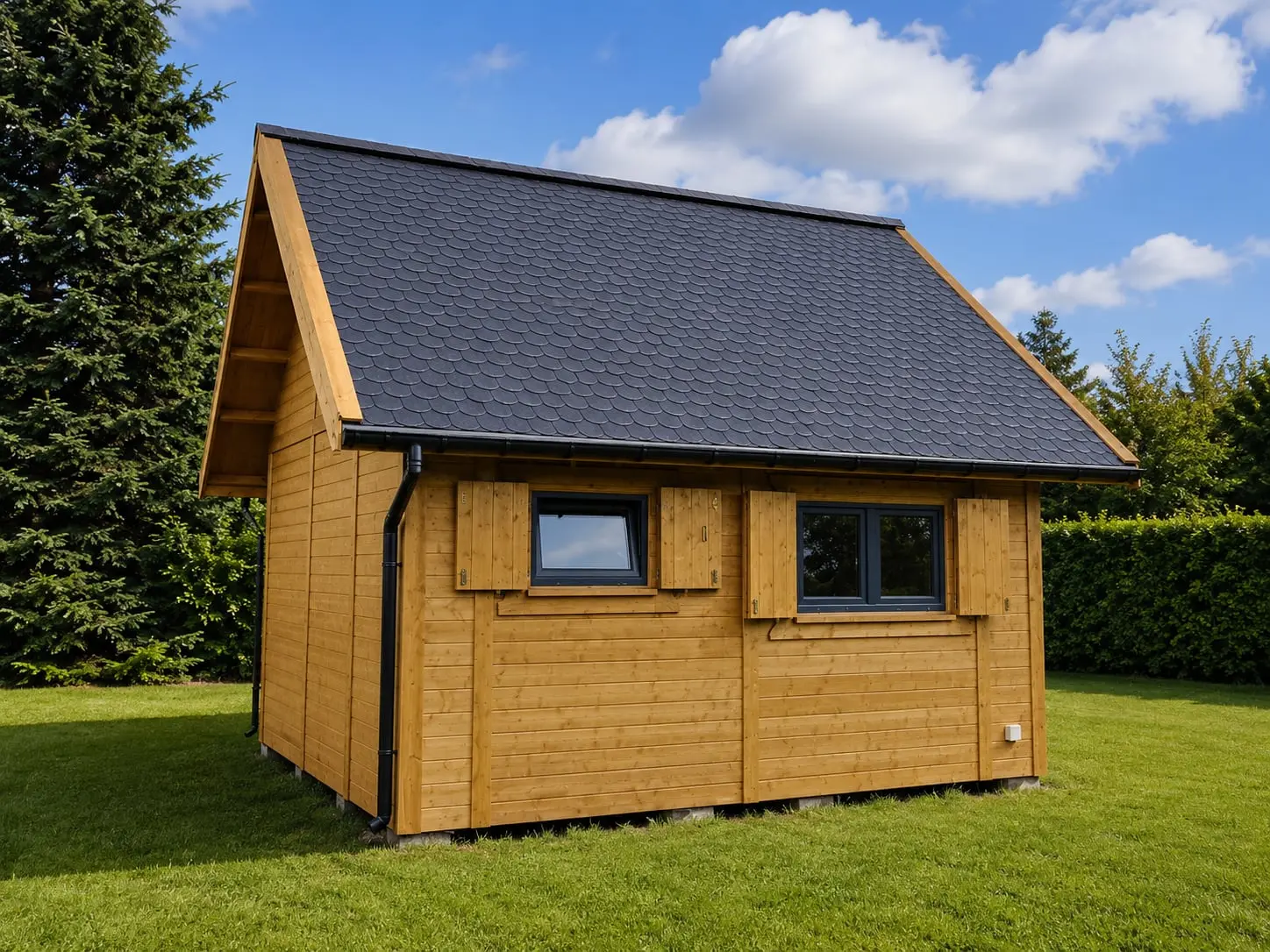
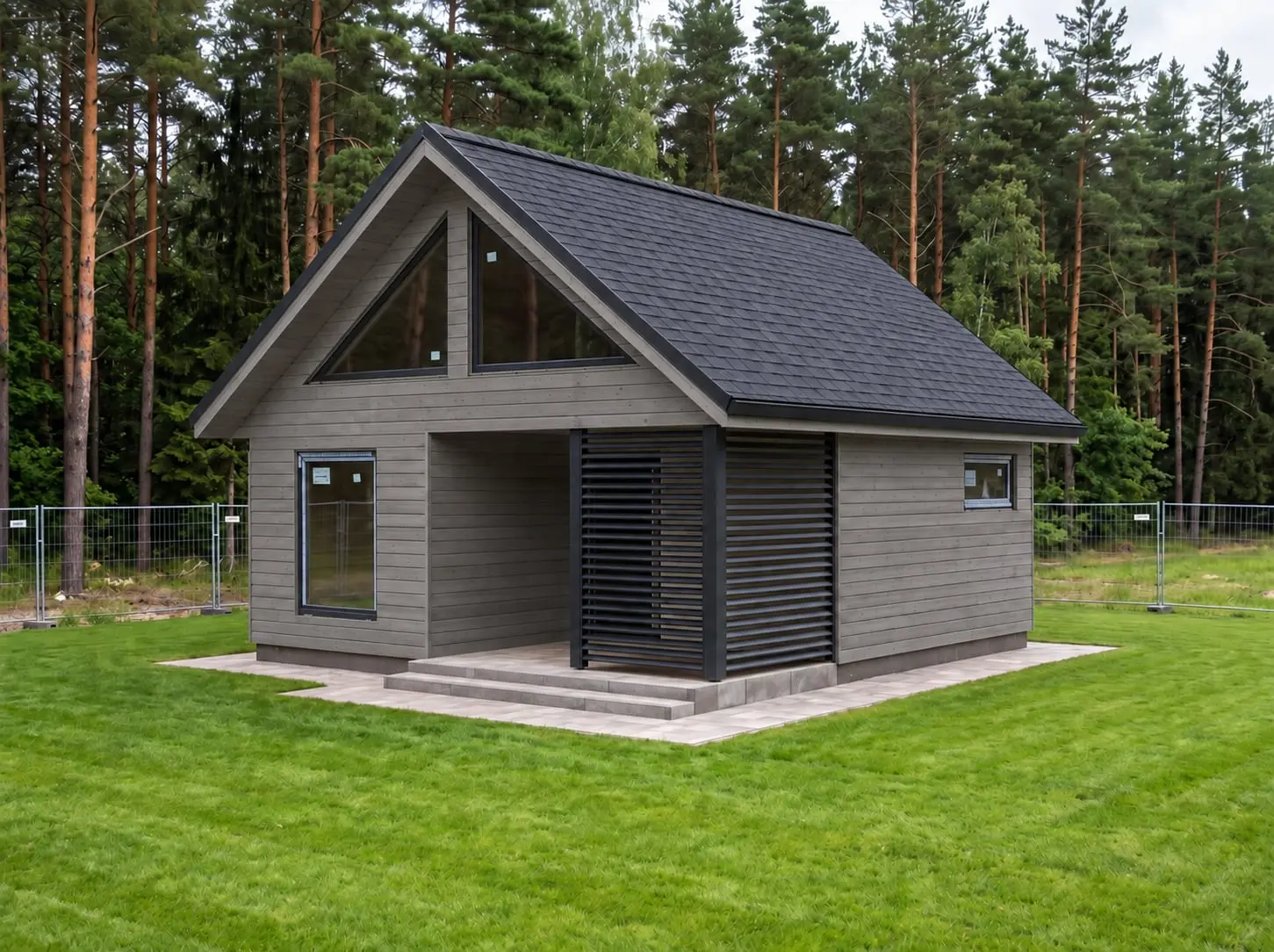
Insulating a wooden house can be quite time-consuming, especially if you want to insulate a holiday cabin that isn’t prepared for year-round use. Yet insulating a wooden cabin is crucial if you want it to be a comfortable place for rest. Proper insulation affects the enjoyment of staying in the home, the residents’ well-being, and helps minimize heating costs. What should guide your choice of the optimal solution? How to insulate a wooden cabin from the inside and from the outside? You’ll discover it in this article!
Insulating a wooden house – what to insulate the holiday cabin with?
In Poland it’s common to build houses from brick or concrete. Many people fear constructions made of wood. Meanwhile, this material has a multitude of advantages. First of all, it is an excellent insulator, which helps maintain an optimal interior temperature. However, due to its hygroscopic properties (related to moisture absorption), you need to carefully select insulation solutions. Not every product is suitable for insulating a wooden house.
The most commonly used insulation materials are mineral wool, polyurethane foam, and polystyrene. Before starting the investment, it’s worth considering what to use for insulating the wooden house. Below we present the advantages and disadvantages of each material.
Preparing for chilly days – mineral wool
Using mineral wool is one of the best ways to insulate a wooden house from the outside. Mineral wool allows excellent moisture vapor transmission, preventing mold growth. Its use in a wooden cabin also yields a high thermal insulation value and, moreover, it is non-combustible. Mineral wool’s elasticity is another advantage, making it easy to install even on uneven surfaces. The product is also very durable and resistant to stretching, which helps it keep its properties for many years.
If you’re tackling roof insulation, 10 cm of mineral wool will suffice. Wall insulation requires a similar amount plus lining the interior with drywall and finishing the exterior. Floor insulation can also be done with mineral wool with a 10 cm layer.
The second solution – polystyrene
Careful consideration is needed when choosing this material. Some specialists believe that insulating a wooden house with polystyrene is not a good idea due to moisture vapor permeability limitations. Indeed, if you plan to insulate a wooden house with polystyrene, poorly matched and fastened boards can contribute to wall dampness.
Therefore you need to create a design that allows moisture to escape from under the polystyrene layer. When insulating this way, you’ll need to perform a number of steps, including creating ventilation gaps, attaching a special vent-enhancing film. To insulate a wooden house with polystyrene, you must be very careful to ensure the boards are laid evenly and cut precisely.
Polyurethane foam – cozy warmth and affordable heating
Many investors consider insulating a wooden house with polyurethane foam. In this case, the insulation cost will be the highest. This is because the product is best applied with specialist equipment, so it’s advisable to use a professional renovation team.
Insulating walls with this variant has several advantages, including high efficiency – a thin layer is sufficient for sealing, which doesn’t burden the structure and maximizes usable space. Thanks to the spray application, the product enables thorough insulation of a timber-frame house. It works even when, for example, roof insulation requires access in hard-to-reach places. It’s also worth noting that the component is durable. It withstands high temperatures and moisture.
Insulating a wooden house – from the inside or from the outside?
Insulating a timber-frame house using the discussed materials is performed exclusively from the inside. Insulators are placed between the wooden framework and the finishing layer in the form of boards. The wooden house structure is supplemented with a vapor barrier film and a wind barrier film. Insulating a cabin with mineral wool does not require creating a dilation space. The situation differs when using polystyrene.
During insulation of a wooden house, pay special attention to critical spots, such as joints between walls and other structural elements. They must be executed precisely. Otherwise, thermal bridges may occur, and the insulation won’t be as effective.
How to properly insulate wooden cabins for cooler days?
Insulating a wooden house is a complex process. What else should you pay attention to? Once you know what you’ll lay inside – on walls, floors and roof – it’s worth ensuring other places through which cold air can pass are addressed. Extremely important is to take care of doors and windows.
At Drewnolandia we offer solid PVC windows in a chambered, double-glazed form. Holiday cabins in our range also have safe, thermally insulated exterior doors. They’re equipped with two locks with three bolts and three anti-burglary bolts. This ensures warmth and safety for every household member!
If you want to go through the entire process of insulating wooden houses on your own – don’t forget about doors and windows. Without them you won’t achieve full effectiveness of the solutions, and heating costs will rise.
Insulating a wooden house from the outside – costs
The cost of exterior insulation depends on many factors, such as the type of material used, the complexity of the work, and the choice of renovation team. Insulating with mineral wool is a popular choice, but it requires precise installation and additional finishing layers. polyurethane foam, although pricier due to the specialist equipment, provides excellent insulation even in hard-to-reach places. Insulating with polystyrene requires extra attention to ventilation. Well-chosen solutions can significantly reduce future heating costs.
FAQ:
1. What’s worth insulating a holiday cabin with?
When insulating a cabin, for walls, floors and the roof, mineral wool is most often used. It’s a proven solution that appears in nearly all year-round wooden houses. Wall cladding can also be done using polyurethane foam or polystyrene (which is less recommended).
2. What distinguishes insulation of a cabin with mineral wool?
Using mineral wool for insulation of a timber-frame structure prevents mold, reduces flammability, and, in addition, provides excellent insulation, is elastic, durable and remains in very good condition for a long time. This cabin insulation is proven and very well known to professionals in the field. It’s the safest form of insulation.
3. What distinguishes insulation of a cabin with polyurethane foam?
This insulation method in year-round homes is mainly associated with one drawback – the cost of insulating this way is fairly high. If this isn’t a hurdle, thermomodernization with foam has only advantages. Such wooden homes are very well insulated and resistant to moisture and high temperatures.