If you’re planning to build a house, the coming months could be pivotal. Starting in 2026, new rules will come into force that largely change how planning permissions are issued. It’s these decisions that determine whether and where you can start an investment. So let’s see exactly what changes and what consequences they bring.
New planning conditions regulations 2026 – introduction and background of changes
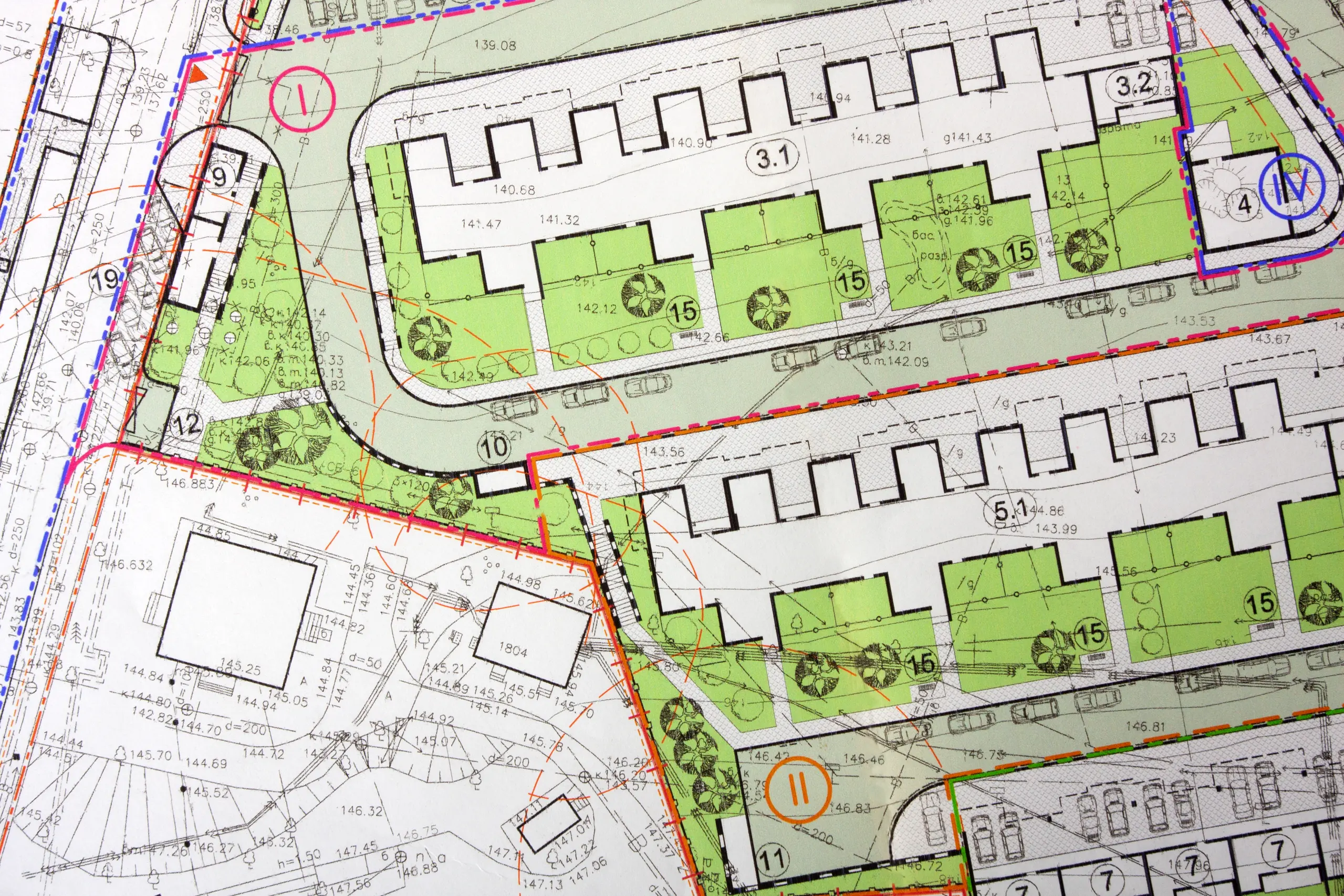
Until now, Poland’s spatial planning system had several gaps. Many communes did not have local zoning plans, and it is these plans that should determine where and what you can build. In such a situation, investors – both private individuals and developers – submitted applications for the decision on building conditions.
Thanks to this, it was possible to raise buildings even on areas not covered by a plan. This meant great freedom – and often led to dispersed development, difficult to serve logistically and costly for the commune in terms of infrastructure.
The spatial planning reform adopted in 2023 and amended in May 2025 changes this situation. From 2026, WZ decisions will no longer be such a common and convenient tool. The aim of the reform is to better organize space and link new investments to the commune’s planning documents.
What do the new planning rules cover?
The amendment of the act changes several key elements of the investment process. Limited validity of decisions, requirement to comply with the commune’s general plan, and designation of areas for construction completion are the most important points that will affect the possibility of starting a home construction in the future.
5-year validity of the decision on building conditions
The biggest and most noticeable change is the limiting of the validity of the building conditions decision. From January 1, 2026, every newly issued decision will be valid for only 5 years.
Today it is different – if you obtained a decision, e.g., in 2024, you could use it as late as 2040. There are no time limits. In practice, many people treated WZ as a kind of safeguard of the land’s value, not planning to build immediately. Now that approach will become impossible.
Why did the legislator decide on such a limit? The idea is that decisions should be linked to the current needs and development plans of the commune. If after 5 years the land requires different use, a new decision will already align with the general plan and spatial policy.
General plan – a new commune document
The second key change is the introduction of the commune’s general plan, which will replace the current study of conditions and directions for development. The general plan will become the basis for issuing WZ decisions and new local plans.
Each commune is obliged to adopt such a document by June 30, 2026. If it does not do so – from July 1, 2026 no building conditions decision will be issued. This means that in practice, building a house in communes late with a plan will be blocked.
For us, private investors, this means the need to monitor the commune’s work and check whether the general plan covers our plot.
Areas of zoning completion (OUZ)
From July 2026, WZ decisions can be issued only in the so-called areas of zoning completion. These are special zones defined in the general plan that indicate places suitable for higher-density development.
What does this mean in practice? If your plot is near existing development, you may be classified into OUZ and still be able to apply for a WZ. However, if the plot is far from a village, town or housing estate, obtaining a decision may be practically impossible from 2026.
Change in urban planning analysis rules
Currently, when applying for a WZ, you can refer to development located several hundred meters away. After the changes, the analysis will be limited toa maximum of 200 meters from our plot. This greatly narrows the field and will prevent communes from citing distant examples.
When will the new building conditions regulations come into force? Important dates
The original plan for the spatial planning reform assumed many new regulations would take effect on January 1, 2026. However, in the 2025 amendment, some deadlines were moved — especially those relating to general plans and the validity of the study. It’s therefore worth summarizing the key dates (as of 2.10.2025):
January 1, 2026 – every new decision on building conditions will be issued for a maximum of 5 years.
June 30, 2026 – the final deadline for communes to pass general plans.
July 1, 2026 – WZ decisions may be issued only in accordance with the general plan and only in OUZ areas.
If you want an undated decision, you have until the end of 2025. This is a crucial cut-off date – after that all decisions will be time-limited.
Who gains, who loses? Effects of the new rules for investors and plot owners
Changes are widely discussed in the investor, architect and legal communities. Several scenarios can be distinguished.
Owners of plots located close to existing development, in areas attractive to communes for growth. Their land will not only remain suitable for development, but may even gain value, because plots with a possibility to obtain WZ will be fewer.
People who invested in agricultural land with the idea of converting it into building land based on WZ will lose out. After 2026 such a strategy will become very difficult. If the plot is not included in OUZ, it will not be possible to obtain new decisions.
Developers and institutional investors will also feel the reform’s effects – they will have to plan investments much more strategically and work more closely with communes.
What to do now? Recommendations for investors before the new rules take effect
If you’re planning to build a house in the coming years, the most important step is to check planning documents in your commune. Visit the commune’s website or ask the planning department what stage the general plan is at. Second, submit your application for building conditions still in 2025. This can help you obtain an undated decision that remains valid even after the new rules come into force.
Also remember that from the moment you obtain the WZ until the building permit, the process is still lengthy – you’ll need a project, opinions, agreements. For recreational investments, ready-made holiday cabins can be a good option, as they often have simpler procedures.
Can the new building conditions regulations still change?
In theory yes – any act can be amended. Yet the planning reform has been in the works for years and has broad support. More likely are minor adjustments, e.g., in deadlines or specifics of the urban planning analysis. Do not count on the basic assumptions – such as 5-year validity of WZ and OUZ restrictions – being reversed.
Most frequently asked questions about the new building conditions regulations (FAQ)
The act’s amendment introduces many new terms that can be hard to understand, especially for people planning to build a house for the first time. That’s why we prepared a set of the most common questions with answers.
From when will the new regulations come into force?
From January 1, 2026, decisions will be issued for only 5 years, and from July 1, 2026, only in accordance with the commune’s general plan.
How long will a decision be valid after the changes?
Each new decision will be valid for a maximum of 5 years.
What is a general plan?
It is a commune document that will replace the study and indicate areas of zoning completion (OUZ), where new investments are possible.
What are areas of zoning completion (OUZ)?
These are areas designated in the general plan near existing development where the commune approves growth.
Will old WZ decisions keep their validity?
Yes – all decisions issued before the end of 2025 will remain undated and valid.
Summary
Changes in building conditions are among the most important events in Polish construction law in recent years. If you’re planning to build a house, this means you need to act faster and plan more precisely. If you want to be sure that your plot retains the ability to be built on, it’s best to obtain a decision in 2025. After 2026, the new rules will be much more restrictive – and whether you’ll be able to build a house will mainly depend on what the commune has planned.
So don’t delay formalities. Check your plot status, track the general plan’s progress, and consider obtaining a decision before the changes take effect. It’s the best way to implement your building plans smoothly.
Do you need help handling formalities before the new rules come into force?Contact us - as an experienced holiday cabin manufacturer operating widely in the Polish market, we are well-versed in the legal procedures for obtaining building conditions or permits.