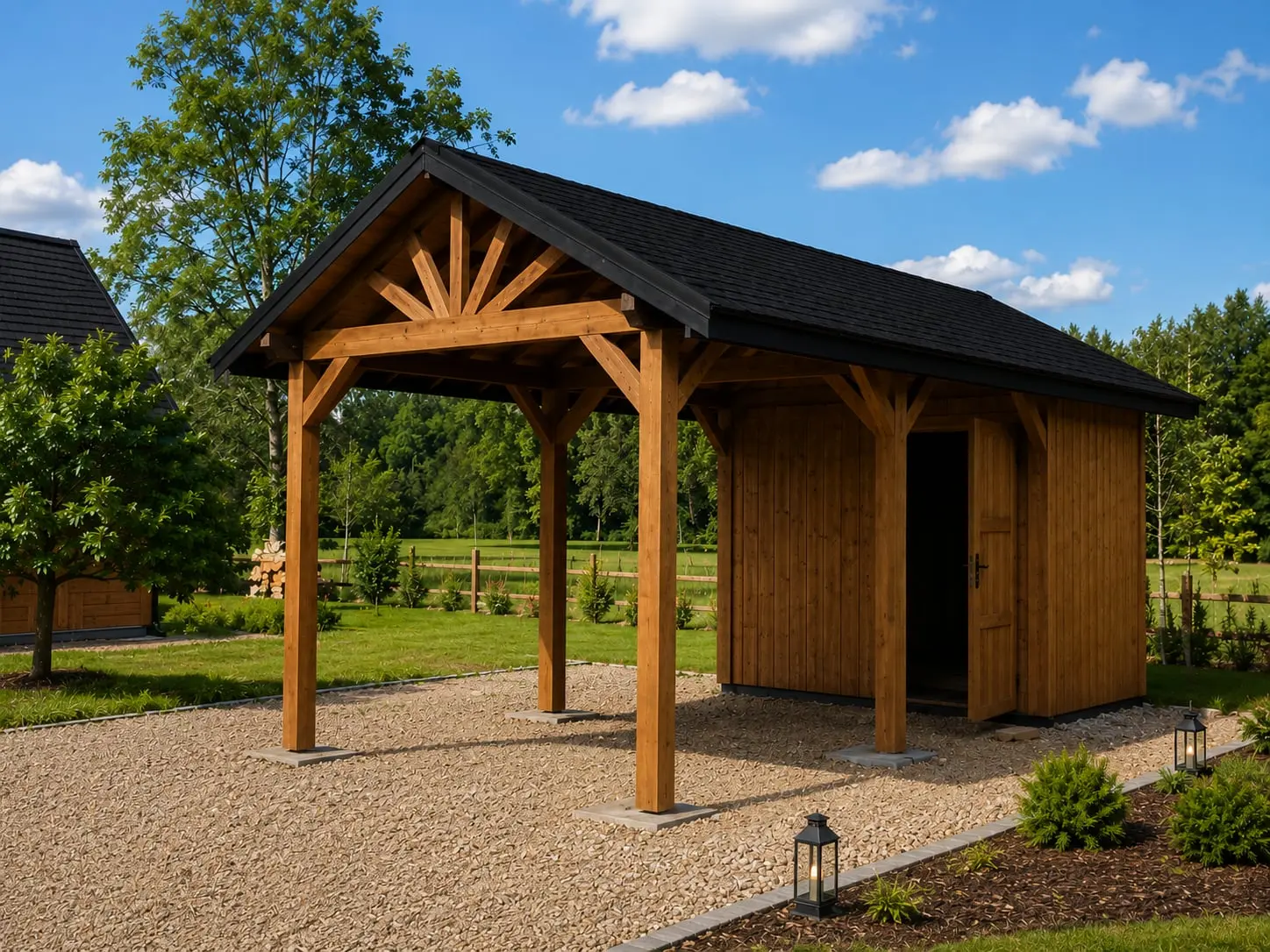
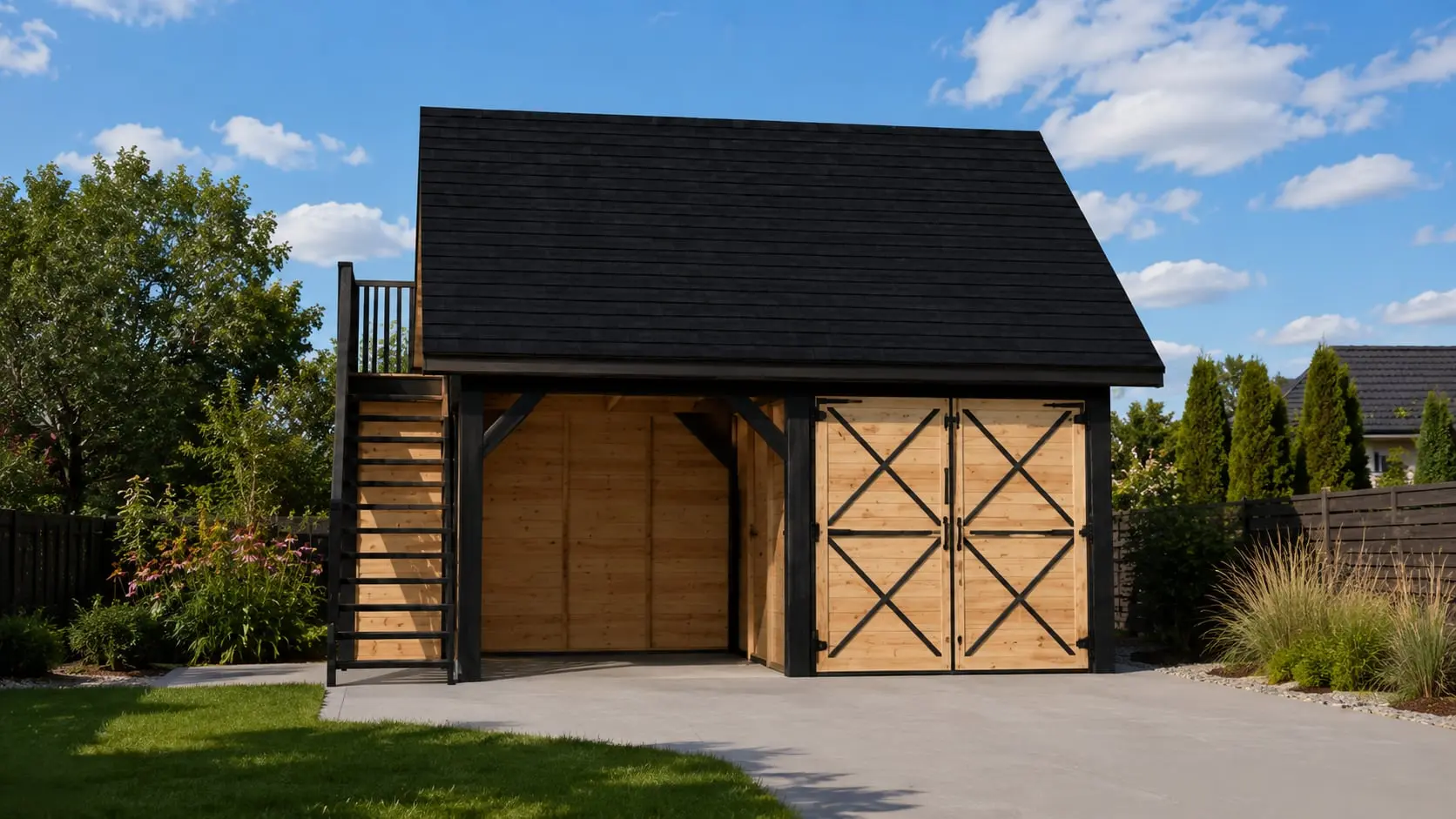
Wood is a natural, renewable material that has been used for centuries in construction, carpentry and furniture making. Although modern technologies have enabled the creation of many contemporary wood-based materials, wood remains one of the most popular materials — both in structures and interior design. It is especially worth understanding the differences between traditional, solid wood and modern glued wood. Each of these materials has slightly different properties and applications — which is why choosing the right type of wood is key to the durability, aesthetics and functionality of the construction.
What’s the difference between solid wood and glued wood?
Solid wood is a fully natural material sourced directly from the trunk of a tree. It does not undergo the gluing process, preserving the original fiber structure, grain pattern and characteristic look. In contrast, glued wood is produced by bonding several thin layers of wood, called laminates. This process helps eliminate many natural wood imperfections, such as knots, cracks or distortions.
Both materials can serve similar functions, but they differ in terms of strength, moisture resistance and dimensional stability. That’s why it’s crucial to match the wood type to the specific application.
Solid wood – naturalness and character
Solid wood (especially solid pine) is one of the most traditional building materials. Valued for its authenticity, it is widely used where natural appearance and texture matter. The grain, tiny imperfections or color variations give interiors a unique climate and catch the eye at first glance.
With proper chamber drying, solid wood can also be used in construction — provided its quality meets requirements, e.g. class C24. It is suitable for building holiday cabins, gazebos, and elements intended for daily use such as wooden floorboards or kitchen countertops. However, remember that solid wood is a moving material — it reacts to changes in humidity, which can lead to deformations. When properly protected, it remains durable for many years.
Structural wood KVH – a modern take on solid wood
KVH structural timber is a natural material but much more technologically advanced. It consists of solid wood elements joined along the grain with micro-dowels. This allows obtaining long, stable beams with a uniform structure and high strength.
KVH stands out for its low moisture (about 15%), knot-free and crack-free, and resistance to deformation. It is a material designed for load-bearing structures — it works in walls, roofs and floors of timber-frame buildings. Its broad use also includes gazebos, terraces and elements of carports and garages.
Glued wood BSH – ruggedness for years
BSH, or cross-laminated wood, is produced by bonding several laminates with synthetic resins. As a result we obtain a product highly resistant to warping, cracking and moisture changes. BSH wood maintains its shape even under heavy loads and in changing weather conditions.
In construction it is used to create large-span structures — without the need for supports. Due to its aesthetics it can also serve a decorative function, e.g. in exposed roof elements or terrace coverings.
I-beams – lightness and strength
I-beams are an innovative solution that combines the advantages of solid wood and wood-based materials. They consist of two flanges made of solid wood or plywood and a web made of OSB or HDF board.
This construction provides high strength at a low weight, making transport and assembly much easier. I-beams reduce thermal bridges and are more environmentally friendly — they require less material, and their production is optimized for material efficiency.
Which wood to choose?
Which wood is better depends mainly on the intended use. If you value a natural look and a classic character — solid wood will be a safe bet. It is indispensable in furniture making, interior styling, and lightweight garden structures.
For load-bearing structures and all-year buildings, materials that are more stable — such as KVH or BSH — perform much better. They are more resistant to deformation, moisture and fire, and their technical parameters meet the highest building standards. What’s more, glued wood does not require additional impregnation — it’s ready for assembly as soon as it’s delivered to the construction site.
Advantages of glued and solid wood – summary
Glued wood:
- exceptionally high strength and resistance to deformation.
- Ready for assembly without impregnation.
- Dimensional stability, moisture resistance and fire resistance.
- Available in various dimensions and lengths.
- Light construction, ideal for larger surfaces.
Solid wood:
- Authentic, natural look with visible grain.
- High durability and mechanical strength with proper protection.
- Ecological, unprocessed material.
- Flexibility and elasticity, especially useful in smaller structures.
- Workability and adaptability to individual projects.
Pine, spruce or larch – which species works best?
Among the most commonly used species are pine and spruce — lightweight woods that are easy to work with and relatively affordable. Pine contains natural resins, increasing its moisture resistance. Spruce, on the other hand, features a light colour and uniform grain, which also looks good in interiors.
Espen (larch) is more expensive and less widely available, but exceptionally durable. It is not under protection of a protected species, but due to slow growth and limited resources it is harder to obtain. It performs very well in external conditions and is superb in premium projects where durability and aesthetics are paramount.
Choose quality
Regardless of whether you choose solid wood, KVH or BSH – the quality of the raw material will always influence the durability and aesthetics of the construction. At Drewnolandia we use only proven materials that meet high quality standards. Solid wood class C24, KVH structural timber and glued BSH are the foundations on which our sturdy holiday cabins and garden gazebos are built. You can read more about the materials we use in the article: Which wood do we use in the production process of the Drewnolandia cabins?.
FAQ
Is solid wood suitable for load-bearing structures?
Yes, but only if it has the appropriate strength class and has been properly dried and treated. It is most suitable for locations with lower loads.
What are the advantages of glued wood in furniture production?
It resists deformation, making it an excellent choice for furniture. Laminating layers eliminates defects such as knots or cracks, ensuring a smooth surface and long-lasting durability. Wooden furniture is less sensitive to changes in humidity.
Does choosing a wood species affect its durability?
Yes, the wood species greatly influences durability and resistance to weather conditions. For example, pine and spruce, which contain natural resins, cope better with moisture and sun exposure. Larch, though more expensive, offers even higher durability, making it a smart exterior choice.